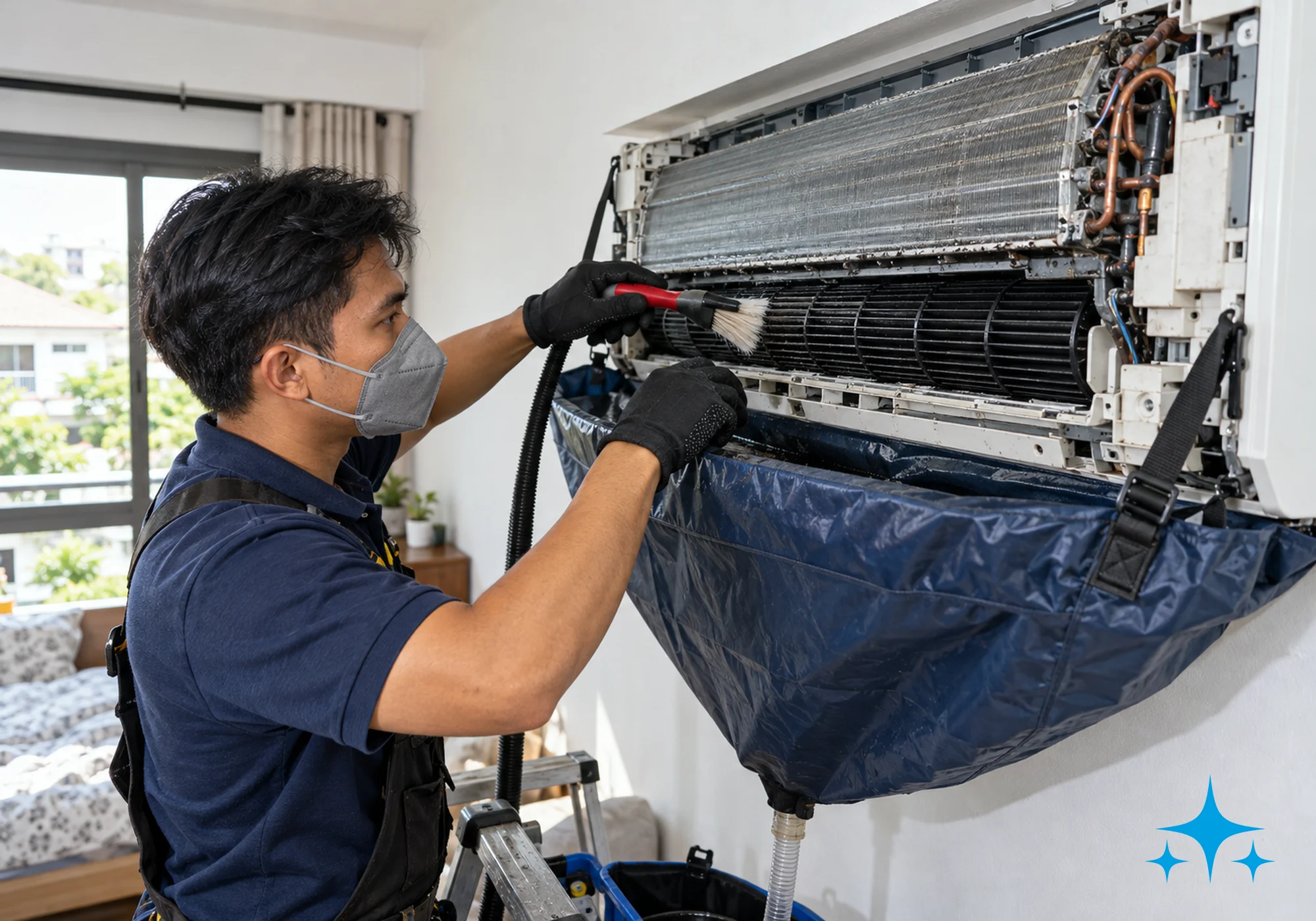
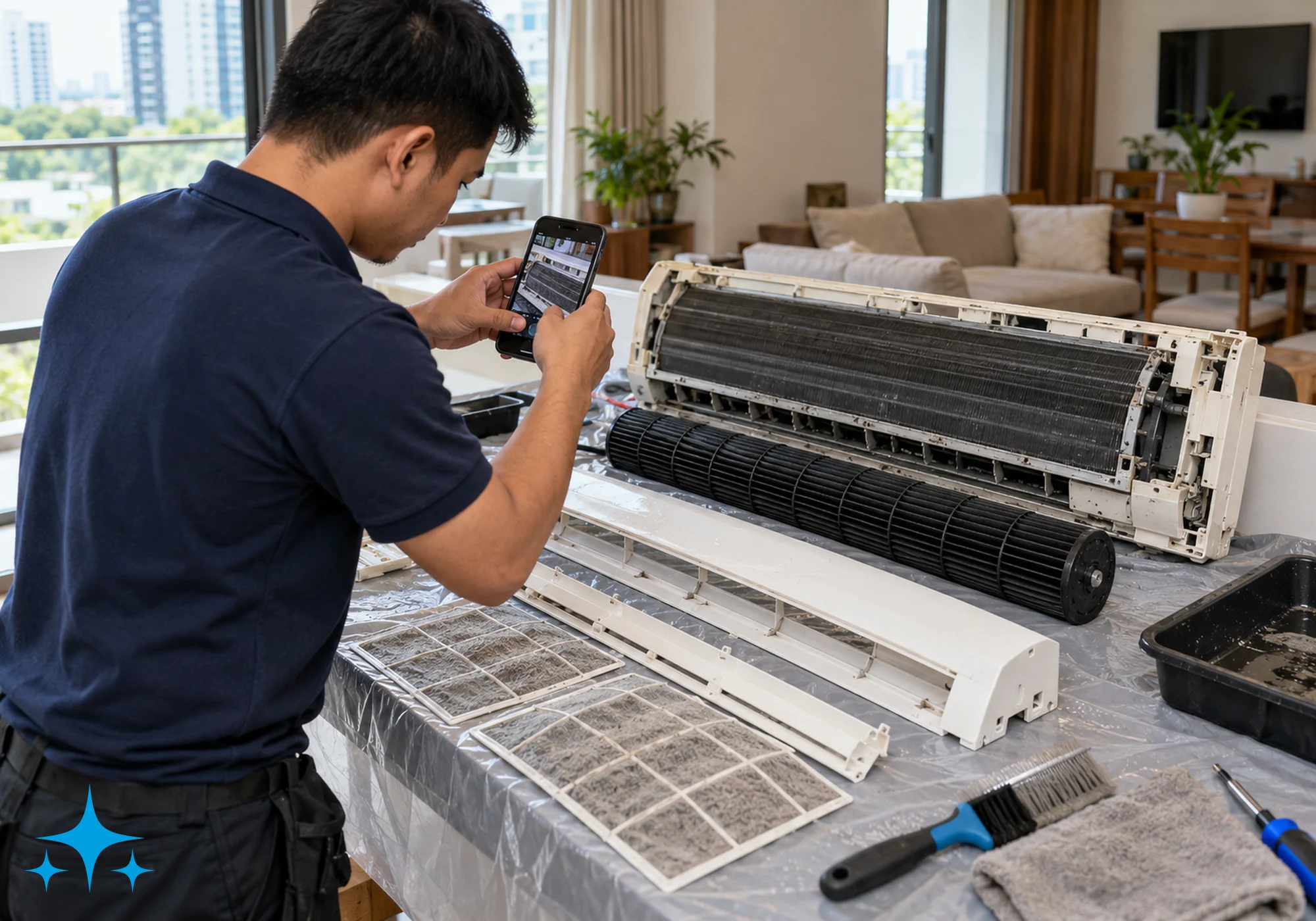
Before accepting a new aircon installation, confirm the exact equipment, agreed scope, documented checks, operating demonstration, warranty records, and any unfinished work. A unit that produces cold air briefly still needs a clear handover. The homeowner’s role is to review the installation with the installer and ask questions, not to perform electrical tests, open refrigerant connections, or improvise technical commissioning procedures.
Begin with the approved quotation and model
Have the agreed quotation available when the installer arrives for handover. Compare the supplied indoor and outdoor equipment with the full model information, where accessible and safe. Check the number of units, included accessories, and locations against the approved scope.
If a substitution was made, ask when it was authorized and what documents establish its suitability. Do not accept a vague explanation that the replacement is effectively the same without identifying it. Keep purchase and installation records together. The aircon installation service page provides the wider service context, while the actual written agreement establishes the specific job. A clear starting document helps you review completion without relying on memory of several conversations with a seller, installer, and building representative.
Review the indoor position and ordinary access
Look at the installed location from a safe position and ask the installer to explain how it follows the equipment instructions. Discuss ordinary airflow, reachable user controls, and future maintenance access. Do not demand a universal clearance based on another model’s diagram.
Check whether agreed surrounding surfaces were protected and whether any visible damage needs to be recorded. A cosmetic mark, a loose decorative cover, and an unresolved equipment issue should not be treated as the same thing. Note each item with a photograph and responsible contact. If furniture or curtains will be returned afterward, ask whether they affect the intended operating space. The final room arrangement should match the conditions used during installation planning, not immediately block an air path that was clear during the demonstration.
Ask about outdoor location and future service access
The installer should explain the outdoor position and maintenance route in terms appropriate to the equipment and property. In a condo, confirm that the location and access arrangements match management approval. Do not climb onto a ledge to inspect mounting or reach behind the unit yourself.
Ask how future service providers will reach the equipment, whether access is building-controlled, and what information the resident should retain. A unit can be difficult to maintain even when the indoor room looks tidy. Record any access limitation and contact person. If a specialist platform, locked service area, or separate permit is involved, include that in the handover notes. This prevents the next cleaning appointment from beginning with an unexpected discovery that a required part of the system cannot be reached.
Request an explanation of documented completion checks
Ask which checks were performed under the manufacturer’s installation procedure and how the results will be recorded. The installer, not the resident, is responsible for the technical process within the agreed scope. Do not turn a customer checklist into instructions for testing live electrical components or refrigerant pressure.
A useful handover identifies the equipment, work completed, checks performed, and unresolved observations. If the installer says a test cannot be completed because power, access, or another requirement is missing, record that limitation explicitly. Do not mark the entire installation complete merely because the unit was mounted. The installation cost and scope guide can help connect the quoted work with the actual delivery. Ask for clarification of any substantial task that appears in the agreement but not in the completion record.
Discuss drainage and visible water concerns
Ask the installer what drainage checks were completed and where normal discharge is intended to go. Confirm any building requirements for the route. Do not pour water into the unit or disconnect a drain to perform your own acceptance test.
Inspect accessible surrounding surfaces for unexplained water or dampness and report it before the team leaves. A visible leak should remain an open item until appropriately addressed. Also ask what to do if leakage appears later and which contact channel handles callbacks. Keep that information distinct from the cleaning schedule. A drainage complaint after installation deserves a clear service record and assessment rather than an assumption that every drip is normal or can wait until the next routine cleaning appointment.
Have the controls demonstrated in ordinary language
Ask the installer to show normal starting and stopping, mode selection, timer use, and any model-specific restrictions. Note which functions belong to the supplied remote and which require an optional app or accessory. Do not assume a symbol on a different remote has the same meaning.
If several people use the room, keep a brief approved operating note where it can be found. Ask what behavior is normal for that model, including any delay explained by the instructions. This can prevent a normal program from being mistaken for a fault. Conversely, do not dismiss a new noise, error, or unusual smell without recording it. The demonstration is an opportunity to learn the equipment’s intended operation, while technical concerns remain with the installer for assessment.
Keep sizing and room expectations visible
Confirm which room or connected area the installation was intended to serve and any conditions used in the recommendation. The horsepower and room-sizing guide explains why area, sunlight, occupancy, and other features matter. Do not treat a generic horsepower label as a promise that every adjoining space will cool equally.
If the room arrangement changed between quotation and installation, tell the installer. New partitions, open doors, appliances, or different use hours can affect expectations. Keep the agreed operating context with the handover record. This helps a later service provider understand whether a complaint concerns a changed room or an issue with the installed equipment. It also avoids relying on a brief demonstration in an empty morning room as proof of comfort under every future condition.
Collect records and identify unfinished work
Request the purchase invoice, installation invoice, relevant model information, warranty instructions, and the available completion report. Confirm whether registration is required and who handles it. Keep any building approvals and contact details with the same equipment record.
Make an explicit list of pending items, responsible people, and agreed follow-up arrangements. Do not let a small unfinished detail disappear into a verbal promise. At the same time, avoid treating every cosmetic preference as a technical defect without discussing it. A clear handover separates completed work, questions needing explanation, and items awaiting action. The household then knows when the aircon is ready for ordinary use and who to contact if a documented concern returns.
A practical handover for a condo bedroom
Imagine a homeowner receiving a newly installed split-type unit. The homeowner compares the model with the quotation, asks about the outdoor access route, and reviews the installer’s completion record. The remote is demonstrated, the intended room conditions are discussed, and any visible water concern is reported before the team departs.
One document is still pending, so the homeowner records who will supply it and when. No electrical cover is opened by the resident, and no pipework is handled to prove a test took place. The final equipment file contains the approved scope, invoices, model details, and follow-up contact. This is a practical acceptance process because it makes the installation reviewable without asking the customer to replace the professional’s technical commissioning responsibilities.
Apply the checklist to your service inquiry
For example, imagine that an installation is ending and the resident is asked to sign the handover. Check that the record identifies the installed equipment and the work completed. Ask for ordinary control guidance and a clear list of open matters. A signature should reflect what you actually understand, rather than imply acceptance of unexplained work.
Organize the information under these five headings before contacting the provider:
- Installed unit identity
- Controls and manuals
- Completed work record
- Unresolved recommendations
- Reporting process for concerns
Keep the facts separate from the outcome you hope to achieve. A short, accurate description gives the booking team a better starting point than a guessed diagnosis or a request for an unspecified package. If information is missing, label it as unknown instead of filling the gap with an estimate. Let the provider explain what can be established remotely and what requires an appropriate on-site assessment.
When you are ready, use the Cleaning Services PH contact page to discuss availability and the suitable scope. Include the unit and property information relevant to this checklist, then confirm the proposed visit and any approval steps in writing. Retain the response with the equipment record so the person receiving the team can explain the same request clearly.
Frequently Asked Questions
Can I keep unused packaging for a possible return?
Check the seller’s return requirements before disposing of the packaging.
Should spare remote batteries be included in handover?
Confirm the supplied accessories against the actual sales or installation agreement.
Can I authorize another adult to receive the installation?
Arrange written authority and give that person the approved scope and questions.
Who should retain a building contractor pass?
Follow the building’s return and record requirements.
Can the invoice show our purchase order number?
Provide the number before billing and ask the provider to confirm its available invoice format.