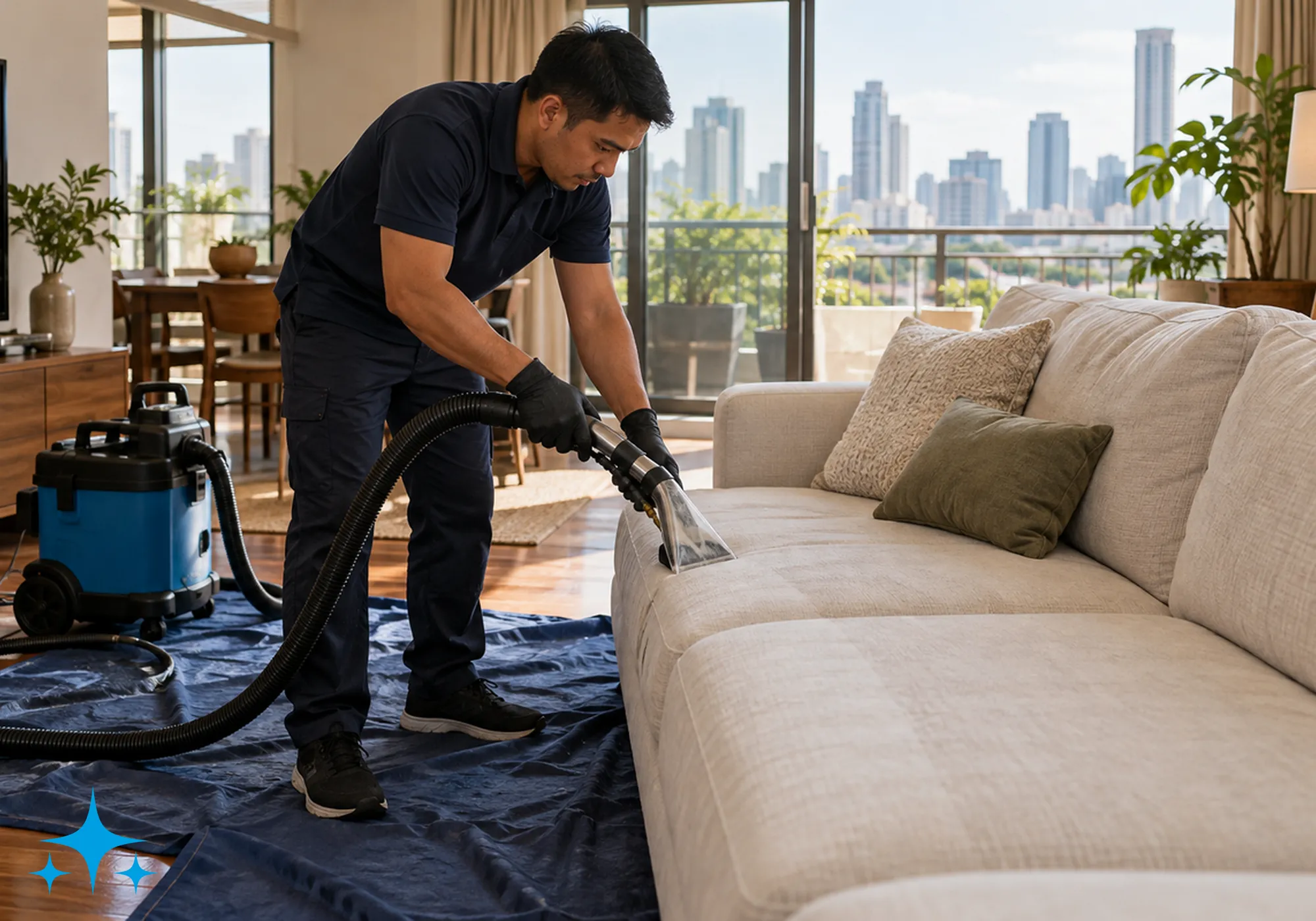
Quick answer: Professional aircon deep cleaning can address internal buildup that ordinary filter care does not reach. Depending on the unit and agreed service scope, the work may include controlled access to the indoor assembly, coil and blower cleaning, drainage checks, outdoor-unit cleaning, reassembly, and testing. However, a chemical wash, complete pull-down, repair, and refrigerant service are different procedures. Ask what is included instead of relying on the phrase “deep clean.”
In the Philippines, an air conditioner can run for long hours in dusty, humid conditions. Washing a removable filter is useful routine care, but it does not tell you the condition of every internal component. When cooling weakens, odors return, or water starts dripping, a closer assessment may be necessary.
The value of professional cleaning comes from a suitable method, careful handling, and an agreed result. It does not come from using the strongest chemical or the highest water pressure. This guide explains what to ask, what happens during a properly scoped visit, and how to distinguish cleaning needs from faults that require separate diagnosis.
What Does Aircon Deep Cleaning Actually Mean?
Service labels vary between providers. One company may call an on-wall indoor wash “general cleaning,” while another markets similar work as “deep cleaning.” A third may include the outdoor unit in its package. The label alone cannot establish which components will be accessed or whether additional work is required.
Therefore, request a written description of the job. It should identify the unit type, components included, method of access, cleaning approach, protection of the room, and final checks. This gives you a practical basis for comparing quotations.
| Service description | What to clarify |
|---|---|
| Routine filter care | Which filters are user-maintainable and whether washing is allowed by the manual. |
| Indoor-unit cleaning | Whether the coil, blower, casing, and drainage areas are included. |
| Indoor and outdoor cleaning | How the outdoor unit will be accessed and what is included. |
| Chemical cleaning | Which product is used, where it is applied, and how compatibility and rinsing are handled. |
| Complete pull-down | Which assembly is removed, why removal is needed, and the additional scope. |
| Repair or refrigerant work | What fault was identified and whether diagnosis and repair are priced separately. |
For a unit-specific starting point, review the Cleaning Services PH aircon cleaning service and share your model, location, symptoms, and access conditions. Ask the team to explain which service scope fits the actual situation.
Filter Cleaning Still Has an Important Role
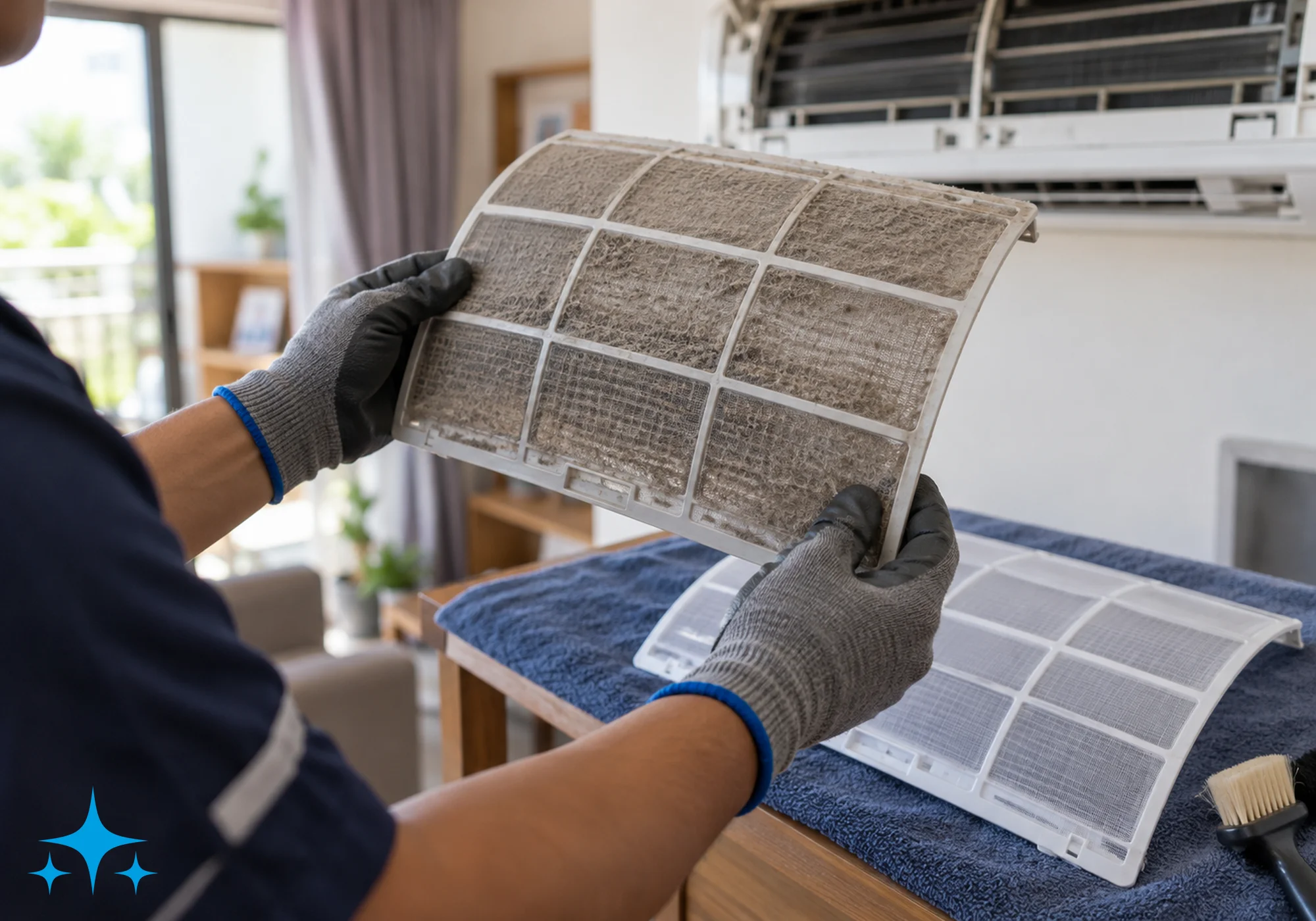
Regular filter care is worth doing. It should not be dismissed as pointless simply because professional cleaning reaches other parts of the system. Follow the instructions for your exact model, since washable mesh filters and specialty purification filters may require different care.
Panasonic Philippines’ maintenance guidance describes cleaning washable air filters and drying them before reinstallation. It also recommends more frequent attention when a unit is used daily in a dusty environment. Your own manual remains the reference for the filter types fitted to your aircon.
If you want help with this routine task, the aircon filter cleaning guide explains the basic homeowner approach. Avoid extending those instructions into internal disassembly or electrical work. A removable filter is very different from a motor, electronic board, or refrigerant connection.
Why Internal Cleaning Needs a Different Approach
Dust and other deposits can accumulate on components beyond the removable filter. The Australian government’s HVAC coil-cleaning fact sheet explains that contamination can impair heat transfer and system performance. It also emphasizes inspection and an appropriate cleaning approach.
However, a homeowner should not assume that every cooling problem comes from dirt. The symptoms need to be assessed in context. A service request should describe what you have noticed, when it happens, and whether the condition changed suddenly or gradually.
For example, tell the provider if the unit cools normally at night but struggles in the afternoon, or if a leak appears only after several hours. Those details are more useful than requesting the most expensive package without a reason. Photographs and the model number can also help the team prepare.
What a Professional Visit Should Cover
1. Confirm the Equipment and Your Main Complaint
Before work begins, the technician should identify the equipment and confirm the agreed scope. A window unit, wall-mounted split system, ceiling cassette, and concealed unit have different access requirements. The service should be appropriate to the model rather than a routine copied blindly from another appliance.
Explain whether your main concern is odor, airflow, cooling, leaking, visible buildup, or ordinary preventive care. Ask what the visit can reasonably address. If an existing problem needs additional investigation, have that recorded before cleaning so the expected outcome is clear.
2. Plan Access and Protect the Work Area
Discuss where technicians will work, which furniture needs moving, and how water and removed parts will be managed. For a condo, this may include building permits, elevator use, and access to the outdoor unit. A suitable plan reduces confusion once the team arrives.
For indoor work, ask about protection for walls, furniture, flooring, and nearby electrical equipment. Containment equipment can be useful where washing is appropriate, but a catch bag does not make every washing method safe. The method still needs to suit the equipment.
3. Isolate Power and Access Only What Is Necessary
Manufacturer instructions should guide safe access. A Panasonic equipment manual, for example, instructs users to disconnect power before cleaning and warns against pouring water on the indoor unit or using harsh chemicals. This illustrates why internal work needs model-specific precautions.
The appropriate degree of disassembly depends on the unit and condition. A technician may remove selected covers or components, but complete removal is not automatically necessary for every service. Ask which parts will be removed and why, particularly if the proposal includes additional charges.
4. Assess and Clean the Indoor Coil
The indoor coil should be assessed as part of the agreed cleaning scope. Ask how the technician will reach the surfaces needing attention and protect surrounding components. If a product is proposed, request an explanation of its purpose and suitability for the coil materials and manufacturer instructions.
There is no universal pressure setting or chemical recipe suitable for every air conditioner. You do not need to choose those technical details yourself. Instead, expect the provider to explain the method clearly and to avoid a one-size-fits-all claim.
5. Address the Blower and Accessible Internal Areas
Ask whether blower cleaning is included and how it will be performed. The answer should distinguish between cleaning while the assembly remains installed and removal where justified. A provider should not imply that removal is always required, or that an inaccessible area has been fully cleaned without explaining the approach.
Likewise, clarify whether the casing, accessible drain-pan areas, and other agreed surfaces are included. A component-by-component description is easier to inspect than a general promise that the entire unit will be “like new.”
6. Check Drainage Within the Service Scope
Drainage deserves attention when water leakage is part of the complaint. The ENERGY STAR maintenance checklist includes condensate-drain inspection among typical maintenance tasks and notes that a blocked drain can cause water damage.
Ask what drainage checks or cleaning are included in the visit and whether the team can demonstrate the result. Also, ask what happens if the leak remains afterward. A recurring leak should lead to further assessment rather than an automatic promise that another wash will solve it.
7. Clarify Outdoor-Unit Work
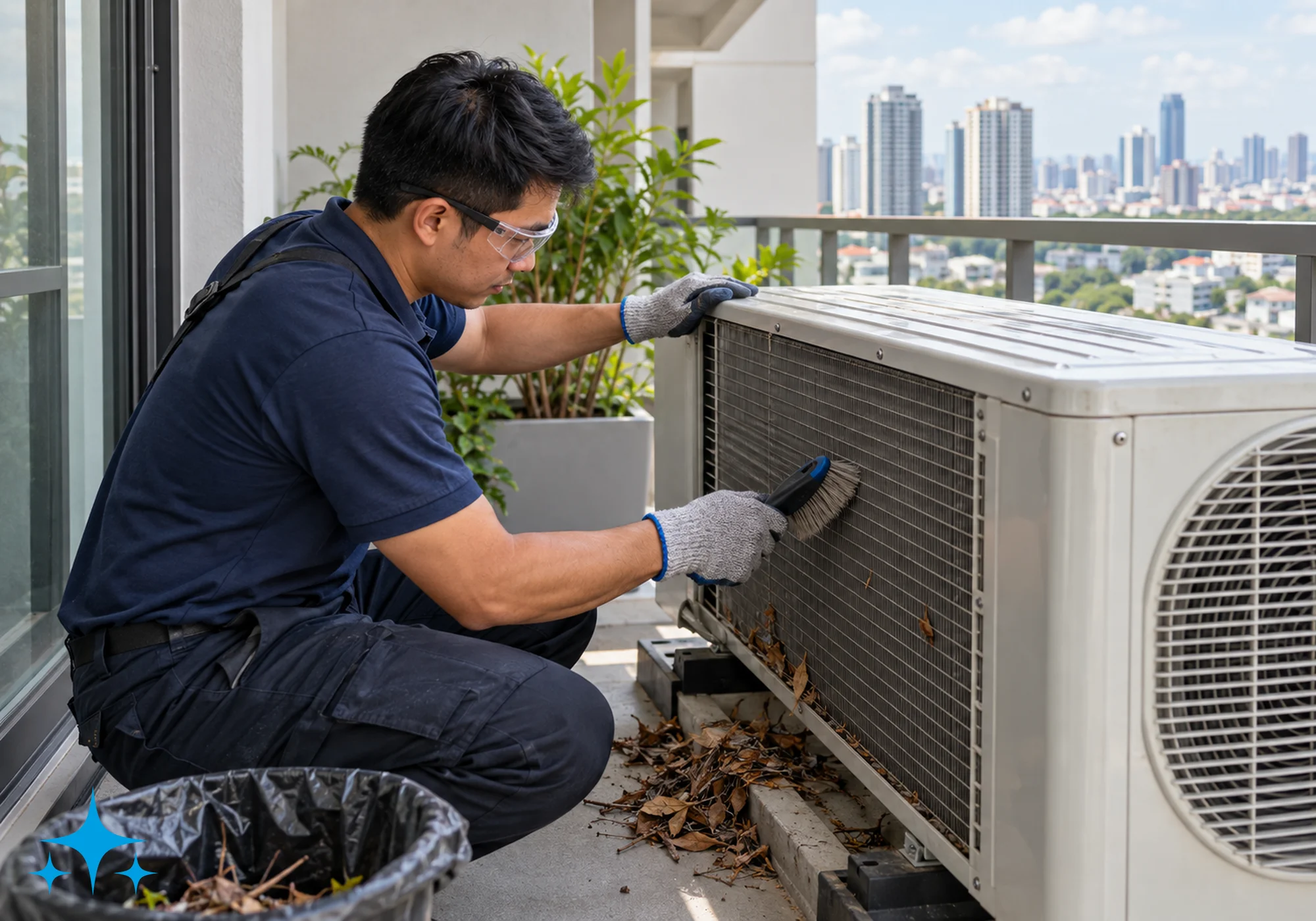
An indoor clean does not necessarily include the outdoor unit. Before booking, confirm whether outdoor cleaning is part of the quotation and provide photographs showing where the equipment is installed. Access outside a high-rise condo can create a very different job from an accessible condenser beside a house.
Do not ask a team to improvise unsafe access on arrival. Discuss the location in advance and confirm any building restrictions, equipment requirements, or exclusions. If outdoor work is not included, have that recorded so you can plan it separately where needed.
8. Reassemble and Perform Agreed Checks
Cleaning should be followed by appropriate reassembly and the checks agreed in your quotation. Ask the technician to explain what was done, show relevant before-and-after observations, and identify any remaining concerns. Photos can document visible areas, although they do not prove the condition of every hidden component.
Keep the service record with the unit’s model information and previous maintenance history. This gives the next technician useful context and helps you track whether a symptom returned after a few days, several weeks, or a longer period.
Chemical Cleaning Is Not Automatically Better
The phrase “chemical wash” describes a cleaning approach, not a guaranteed level of effectiveness. A quotation should say what product will be used, on which components, and why it is appropriate. Ask how the technician handles any required dilution, contact time, rinsing, and disposal according to the product and equipment instructions.
Also, distinguish cleaning from a disinfectant claim. Removing dirt does not establish that the unit has been sterilized, that every microorganism has been eliminated, or that future mold growth is prevented. If disinfection is advertised, ask for the product’s intended use and the actual treatment procedure.
For a more detailed comparison, consider the questions raised in the original quotation: what condition is being treated, which surfaces are accessible, and how will the result be evaluated? A stronger-sounding label should not replace those answers.
When Is a Complete Pull-Down Worth Discussing?
A complete pull-down may be proposed when important areas cannot be reached adequately through the planned in-place service. However, the provider should explain the specific reason, what will be removed, how the work differs, and whether additional testing or other tasks are required.
Ask for a separate written price and scope before approving the extra work. You should understand whether the proposal concerns removable components, the indoor assembly, or work involving system connections. These details affect the procedure and should not be left to a vague verbal agreement.
It is reasonable to ask whether a narrower service could address the issue and what would remain unresolved. It is also reasonable to seek a second assessment for an expensive recommendation. The decision should follow the unit’s documented condition rather than a blanket rule that every aircon needs the same treatment.
Cleaning and Repair Are Separate Decisions
If a technician identifies a component fault, installation issue, or other problem outside the cleaning scope, ask for the diagnosis and repair proposal separately. A cleaning charge should not quietly become an open-ended repair bill.
For recurring performance concerns, the guide to calling an aircon technician helps distinguish a service request from ordinary filter care. Describe the symptoms and allow the technician to assess the cause instead of prescribing a repair yourself.
Similarly, refrigerant work should not be treated as an automatic add-on to every wash. Ask what observation or testing supports the recommendation, what the work includes, and how the price is determined. Clarifying the reason keeps the decision focused on the equipment’s needs.
What Changes the Price of Aircon Deep Cleaning?
The price depends on unit type, capacity, condition, access, included components, and service depth. A quotation may also differ because of parking, travel, building requirements, or the need for additional equipment. A low headline price can be difficult to compare if these details are missing.
Use the aircon cleaning cost guide to identify quote factors, then request a current written offer for your unit. Do not treat an old article’s rate, a different provider’s advertisement, or a general market estimate as a Cleaning Services PH quotation.
When comparing two offers, check that both include the same indoor and outdoor work, any removal, testing, and access arrangements. If they differ, compare those differences before deciding that one provider is simply more expensive.
Your Booking and Handover Checklist
- Send the brand, model number, unit type, and capacity.
- Describe the symptoms, usage pattern, and last known service date.
- Provide photos of indoor and outdoor access.
- Confirm components included, exclusions, and optional work.
- Ask about manufacturer-compatible methods and room protection.
- Agree on the price and procedure for any additional recommendation.
- Review the result and keep a service record after the visit.
For homes with several units, keep a separate note for each aircon. A bedroom unit used overnight may have different needs from a unit serving a busy living room. Recording observations by unit helps the provider quote accurately and prevents one complaint from being confused with another.
Finally, schedule future care using the manufacturer’s instructions and the equipment’s actual condition. The aircon cleaning frequency guide can help you organize filter checks and professional visits. A maintenance routine works best when it responds to usage, environment, and inspection findings.
To arrange an assessment or cleaning quotation, share your details through the Cleaning Services PH contact page. Ask for a clear component list, price, and explanation of any optional work. That makes the service easier to compare, inspect, and plan.
Frequently Asked Questions
Does Aircon Deep Cleaning Always Require Removing the Entire Indoor Unit?
No. Appropriate access depends on the model, condition, and agreed service. Selected components may be cleaned or removed without a complete pull-down. Ask the provider to explain what removal is proposed, why it is needed, and how it affects the price.
Will a Chemical Wash Fix Every Odor, Leak, or Cooling Problem?
No. A chemical wash cannot establish the cause of every symptom. Cleaning may address buildup, but remaining problems can need separate assessment or repair. Confirm the proposed scope and ask what the provider will do if the original complaint remains.
Can I Skip Filter Cleaning After Booking a Professional Service?
No. Continue the routine care described in your model’s manual. Professional servicing complements that maintenance rather than replacing it. Check which filters are washable, use the prescribed method, and arrange further service when the unit’s condition warrants it.