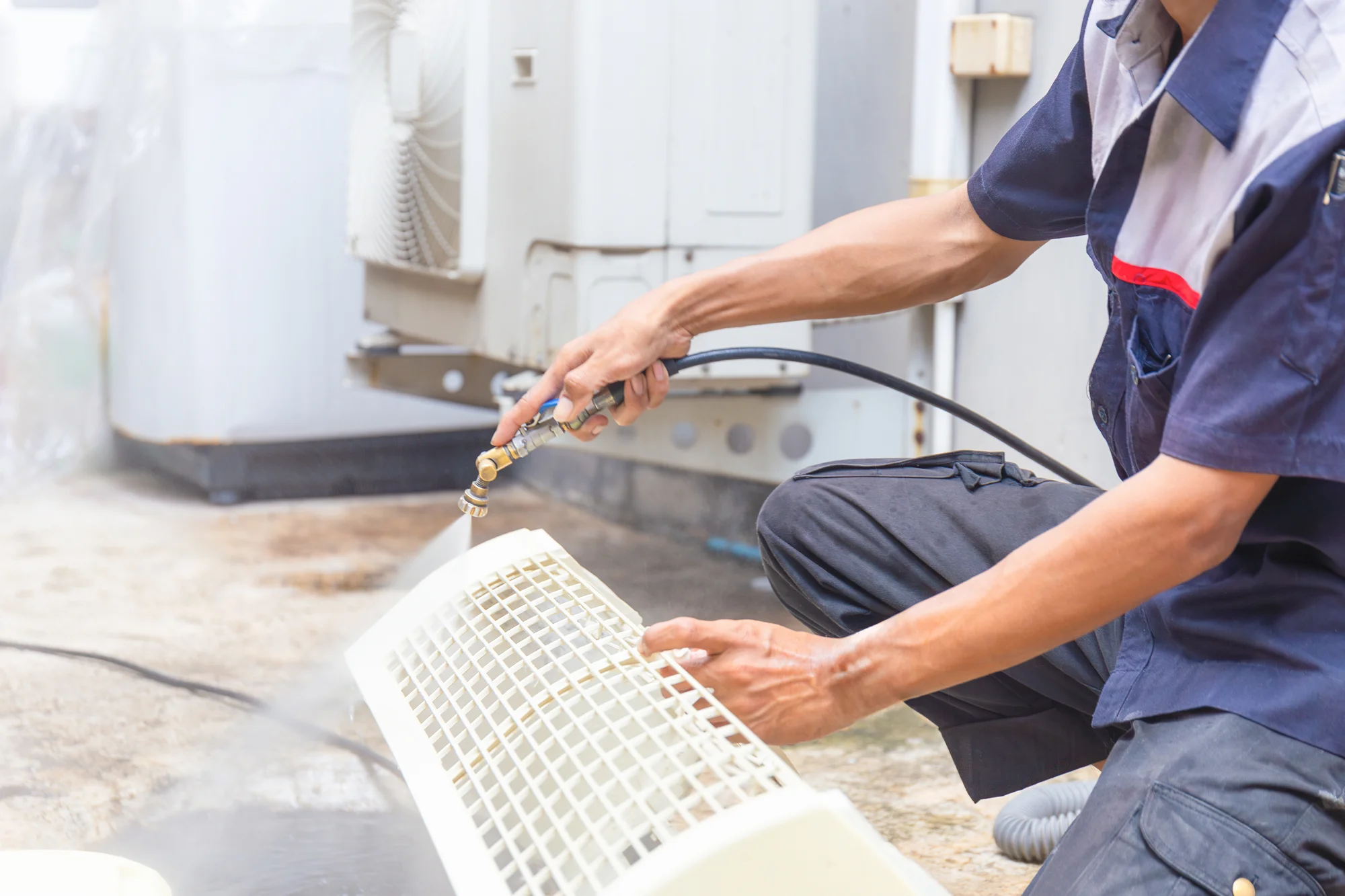
A dirty air conditioner doesn’t just smell musty — it quietly costs you money every day it runs uncleaned. Here’s what actually happens when cleaning is neglected:
How Often to Clean Each Part of Your Air Conditioner
1. Air Filter — Every 2 to 4 Weeks
The air filter is the most important and most frequently neglected component. It catches dust, pet hair, pollen, and pollutants before they reach the internal coils. Once clogged, airflow drops dramatically and everything downstream suffers.
Pro Tip — The “2-Week Rule” for the Philippines
In Metro Manila and other urban or coastal areas, air quality and humidity mean filters clog faster than in temperate climates. If your AC runs more than 8 hours a day, clean the filter every 2 weeks. For bedroom units used only at night, monthly cleaning is usually sufficient.
How to clean it yourself:
- Turn off the AC unit at the power source — not just the remote.
- Open the front panel and carefully slide out the filter(s).
- Tap gently to dislodge loose dust, then rinse with cool running water.
- Use a soft brush or diluted mild soap for stubborn grime.
- Let the filter air-dry completely — at least 1 hour — before reinstalling. Never reinstall a wet filter.
2. Evaporator Coils — Every 3 to 6 Months
The evaporator coil is the cold indoor coil that absorbs heat from your room’s air. Even with a clean filter, fine particles eventually coat it in a layer of insulating grime — reducing its ability to cool. A 0.1mm layer of dust on the coil can reduce efficiency by up to 5%.
Coil cleaning typically involves chemical coil cleaners or high-pressure rinsing and is best done by a professional to avoid bending the delicate fins or causing refrigerant leaks.
3. Drain Pan and Drainage Pipe — Monthly
As the evaporator coil cools the air, it pulls moisture out of it. This condensation drips into the drain pan and flows out through the drainage pipe. In humid climates, this means significant volumes of water passing through every day.
Warning — Blocked Drains Are a Common Cause of Water Damage
Algae, mold, and debris block drain pipes quickly in humid conditions. Flush the drain pipe with a cup of diluted bleach (1 part bleach to 10 parts water) monthly to prevent blockages. If water is dripping from the indoor unit, your drain is already blocked.
4. Condenser Coils — Every 3 to 6 Months
The condenser coil is the outdoor unit’s heat-rejection coil. It releases the heat absorbed from your room to the outside air. Leaves, dust, and cottonwood debris can pack densely between the fins, dramatically reducing performance. Clean the outdoor unit’s surrounding area monthly and have the coil itself professionally cleaned every 3–6 months.
5. Blower Fan — Every 6 Months
The blower fan circulates air across the evaporator coil. Over time, each blade accumulates a thick ring of dust that unbalances the fan, increases noise, and reduces airflow. This is a professional job, as it requires disassembly of the indoor unit.
6. Vents and Grilles — Monthly
This is the one task anyone can do in five minutes. Wipe down the air inlet and outlet grilles with a damp microfiber cloth monthly. Blocked grilles reduce airflow even when everything else inside is clean.
Cleaning Frequency by Air Conditioner Type
The recommended schedule above applies broadly, but different AC types have different accessibility and fouling rates:
7 Signs Your Air Conditioner Needs Cleaning Right Now
Don’t wait for the schedule if you notice any of these:
- Musty or stale smellwhen the AC first turns on — a classic sign of mold in the drain pan or on the coils.
- Reduced airflow— you can feel less air coming from the vents even at maximum fan speed.
- Room takes much longer to cool— your unit runs longer to reach your set temperature.
- Water drippingfrom the indoor unit — blocked drain pipe.
- Visible dust on the ventsor a gray tinge on the filter.
- Unusual noise— rattling or grinding can indicate debris in the fan or an unbalanced blower blade.
- Higher-than-normal electricity billwithout a change in usage patterns.
Do Not Ignore Water Leaks
Water leaking from the indoor unit can damage ceilings, walls, and electrical wiring. If you see dripping, turn the unit off immediately and have the drain pipe cleared before running it again.
What You Can Clean Yourself vs. What Needs a Professional
Safe for DIY Cleaning
- Air filter removal, washing, and reinstallation
- Wiping down external vents and grilles
- Flushing the drain pipe with diluted bleach solution
- Clearing visible debris around the outdoor condenser unit
- Gently wiping accessible parts of the indoor casing
Always Hire a Professional For
- Evaporator and condenser coil chemical cleaning
- Blower fan disassembly and deep cleaning
- Refrigerant level checking and recharging
- Any electrical component inspection or replacement
- Suspected mold remediation inside the unit
What Does a Professional AC Cleaning Include?
A proper professional cleaning (often called “general cleaning” in the Philippines) should include: chemical coil washing, blower fan cleaning, drain pipe flushing, condenser coil cleaning, filter cleaning or replacement, and a post-clean test run. Basic cleaning typically costs ₱500–₱1,500 per unit; chemical deep cleaning ranges from ₱1,500–₱3,500 depending on unit type and size.
When to Clean More Frequently Than Usual
Certain conditions mean your AC accumulates dirt faster and requires more frequent attention:
- Construction or renovation nearby – concrete dust and fine particles clog filters within days. Check weekly.
- Pets in the home – pet hair and dander load up filters rapidly. Clean every 1–2 weeks.
- Heavy summer use (March–May in the Philippines) – if your AC runs 12–16 hours a day, double your cleaning frequency.
- Near a busy road – vehicle pollution and road dust accelerate fouling.
- After a typhoon – strong winds push outdoor debris into the condenser unit. Inspect and clean after any major storm.
- Someone in the household has allergies or asthma – prioritize filter cleanliness as a health measure, not just efficiency.
Frequently Asked Questions
How often should you get your air conditioner serviced by a professional?
For most households with daily AC use, a professional service every 6 months is ideal. If usage is occasional or the environment is relatively clean, once a year may be sufficient. Commercial units should be serviced every 3–4 months.
Can I clean my AC coils myself?
You can lightly brush accessible coil fins with a soft brush, but a thorough chemical coil wash — which is what’s needed for real cleaning — should be done by a technician. Improper handling can bend delicate fins, block airflow, or cause refrigerant leaks.
What happens if I never clean my air conditioner?
Without regular cleaning, your AC will gradually consume more electricity, cool less effectively, and develop mold and bacterial growth. Eventually, the compressor or fan motor will fail — repairs that often cost more than a new unit. Most manufacturers also void warranties for units without maintenance records.
Is it bad to use your AC while it’s dirty?
Yes. Running a dirty AC spreads allergens, mold spores, and bacteria through your air. It also causes the motor to strain under restricted airflow, generating more heat internally and accelerating wear on every component.
The Bottom Line
Cleaning your air conditioner isn’t complicated — but it requires consistency. The single most impactful habit is washing your filter every 2–4 weeks. Beyond that, professional cleaning every 6 months handles everything a typical homeowner can’t safely reach. In the Philippines’ hot, humid climate, neglecting AC maintenance costs more than you think — in energy bills, repairs, and air quality. A ₱1,500 cleaning service every 6 months is far cheaper than a ₱15,000 compressor repair or a ₱30,000+ unit replacement. Set a recurring reminder on your phone today. Your AC — and your lungs — will thank you.
How long does a professional AC cleaning take?
A standard professional cleaning typically takes 45 minutes to 1.5 hours per unit. A chemical deep clean may take 2–3 hours, including drying time before the unit can be turned back on.
Should I clean my AC before or after the summer season?
Both. A pre-summer clean (February–March) ensures your unit is at peak efficiency when you need it most. A post-summer clean (June–July) removes the heavy buildup accumulated during months of intensive use and prevents mold from developing during the rainy season.