Quick answer: Regular cleaning removes accessible dust and buildup with appropriate tools and washing. “Chemical cleaning” describes the use of a cleaning product, but it does not specify how much of the unit is opened, which components are treated, or whether the underlying cause of an odor or leak is fixed. Ask a technician to identify the problem, product, surfaces, rinse method, and price before approving a chemical wash. The right service is the one that addresses a documented condition while following the unit manufacturer’s instructions.
A quote for “aircon chemical cleaning” or “deep cleaning” should explain both its cost and the work it includes. These phrases are often used inconsistently. An advertised chemical wash may be performed with the unit on the wall; a complete pull-down describes disassembly rather than a particular chemical. A simple filter rinse is narrower than either. Learning the distinctions can prevent you from paying for an impressive label that does not solve your actual complaint.
Define the problem before the service
Tell the provider what you see, hear, and smell. Weak airflow with a visibly clogged filter points toward maintenance. A musty odor that quickly returns after cleaning may call for inspection of hidden buildup and moisture. Indoor dripping can result from a blocked drain, a damaged tray, insulation, or installation slope. Poor cooling can have electrical or mechanical causes even when the unit is clean. A breaker that trips or an abnormal grinding noise warrants diagnosis rather than a routine wash.
Record when symptoms occur and the date of the last service. Send a model photo and a safe photo of any accessible leak. This helps a technician prepare and makes it harder for a generic package to replace a proper assessment. The cleaning or repair guide explains why symptoms should direct the next step.
What a regular professional cleaning may include
Scope varies by provider and equipment. A typical quote may cover filters, accessible coil and fan surfaces, casing, drainage, and appropriate cleaning of the outdoor section. Ask for a written checklist and whether operating and drainage tests are included. Cleaning the user-accessible filter is valuable, but it does not necessarily reach the blower, drain tray, or interior coil. The site’s filter cleaning guide focuses on the limited tasks an owner can do safely between visits.
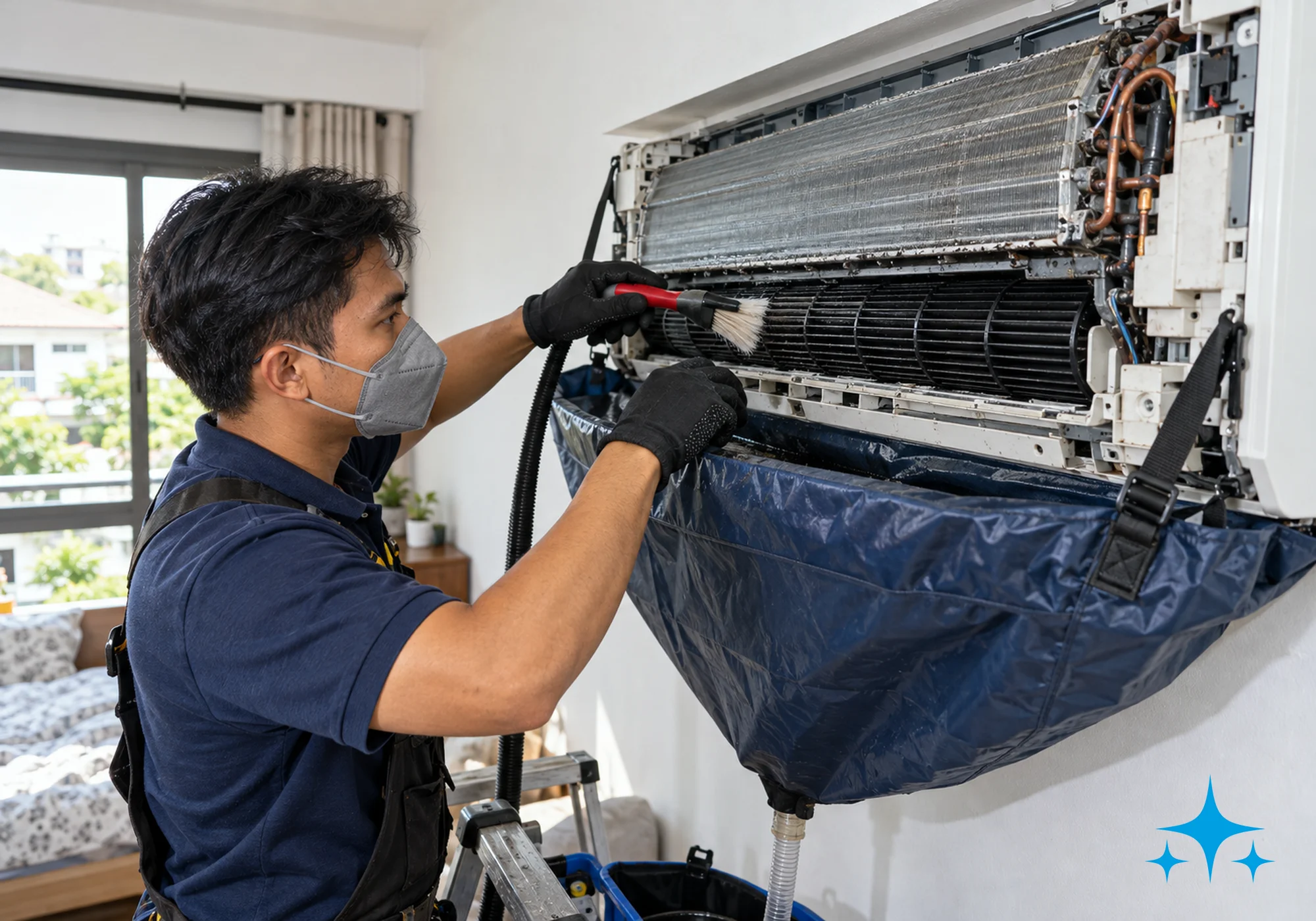
For a window unit, removal from its opening may be relevant. For a wall split, the provider may use a protective wash bag and leave the unit installed. For a cassette or concealed unit, access panels and height change the work. No single description fits every machine. Ask whether the company protects nearby walls, electronics, and flooring and how wastewater will be captured.
What a chemical wash actually means
A chemical wash should be described by the product used, its intended surface, concentration or preparation according to its instructions, dwell and rinse procedure, and precautions for the unit and occupants. The word “chemical” alone is not a quality standard; ordinary cleaners are chemicals too. The key questions are whether the product is appropriate for the coil and other materials, whether residue will be removed, and whether sensitive electrical components will stay protected.
Do not attempt to pour strong cleaners into an assembled aircon or mix cleaning agents. If a technician recommends a treatment, ask to see the reason: stubborn deposits, a specific contamination issue, or a manufacturer-approved procedure. A lingering smell might reflect a recurring moisture problem, in which case cleaning alone may offer only temporary relief. The site’s article on aircon mold and mildew provides related context without replacing a site inspection.
Deep cleaning and pull-down are separate decisions
“Deep cleaning” should be translated into tasks. Does it include removal of the blower wheel, treatment of the drain tray, or complete indoor-unit removal? A complete pull-down provides access to parts that cannot be reached well in place, but it adds labor and can affect installation. It may not be necessary for a lightly soiled unit. Ask what standard cleaning cannot accomplish, how the deeper method addresses it, and what the technician will test afterward.
Published provider schedules show why this distinction affects price. Carrier lists an additional ₱4,000 for complete pull-down cleaning of a split unit in NCR; Teko lists an additional ₱4,500. These are specific published examples as of October 2026, not the rate for every aircon or a quote from Cleaning Services PH. A chemical treatment may be a different charge. Get every add-on in writing.
Questions that expose a vague quote
Ask: What condition did you find? Which components are affected? Can you show me a photograph? What is included in the base cleaning? What specifically will the chemical treatment do that normal cleaning cannot? Will any part be removed? Is the outdoor unit included? What happens if the symptom persists? A clear technician can answer in ordinary language without promising that a wash will repair a defective motor or circuit board.
Compare two quotes on the same unit and symptoms. If one includes outdoor access, panel removal, and drainage testing while another includes only a quick indoor rinse, the totals are not equivalent. Check travel, height, taxes, and any minimum callout charge. Ask whether a separate diagnostic fee applies if the problem turns out to be a repair. The broader aircon cost guide explains the factors behind service pricing.
Protect the household and the equipment
Keep children and pets out of the work area. Discuss allergies or sensitivities with the provider before any product is used, and ask for product information when relevant. Ensure the technician can isolate power and protect finishes. Do not run the unit before the agreed drying and testing steps. If you are in a condominium, coordinate contractor access, service hours, and water disposal with management.
Check warranty conditions before authorizing disassembly by a third-party provider. A manufacturer’s instructions may limit methods and materials. If the technician identifies a broken component, request a separate repair proposal with the part and labor listed. Avoid combining a cleaning fee, a vague “chemical treatment,” and an unexplained replacement in one unreviewable total.
Evaluate the result, not the label
After service, request a report of what was cleaned and any fault discovered. Observe airflow, cooling, drainage, and odor during a reasonable operating test. Some water may remain on washed surfaces briefly, but continued indoor dripping is a complaint that deserves follow-up. Keep photographs and the service date. If the same odor returns rapidly, investigate the moisture source rather than ordering a stronger chemical automatically.
A routine service, a targeted treatment, and a pull-down each have a place. The decision should follow inspection, safe access, and a transparent quote. Contact the site’s aircon cleaning team with the unit details and symptoms so the proposed scope can be discussed before work begins.
How to describe a recurring complaint
Write down the time the symptom begins, whether it follows rain or long operating hours, and what changed after the last service. A smell only when the unit starts, a leak after several hours, and weak cooling all the time are distinct observations. Note the room conditions and whether another source of moisture is present. This history helps the technician test a specific cause rather than assuming every complaint requires a chemical wash.
Ask for a brief before-and-after assessment. The provider can record visible deposits, drain condition, airflow observations, and any part that needs a separate repair. The report should state the product and method used when a treatment is performed. Keep the invoice with your unit’s model and service date. If the same issue returns quickly, show the history to the provider and ask what condition was not resolved. This is more productive than paying for a stronger treatment without checking whether the underlying fault remains.
Why the cheapest quoted method may cost more later
A very low quote can be appropriate for a limited task, such as a straightforward accessible wash. It becomes expensive when the scope is too narrow for the problem and you must book a second visit. Conversely, an extensive chemical treatment or pull-down is poor value if the problem is a torn filter or a failing motor. Compare the cost of diagnosis, cleaning, any access add-on, and follow-up as one decision. Request an itemized proposal so you can choose the required work without paying for every option on the service menu.
Frequently Asked Questions
Can I request the product name in advance?
Yes. Ask for it and its use instructions before treatment.
Must I leave the room during service?
Follow the technician’s site and product-specific guidance.
Can I decline an add-on after inspection?
Yes. Request a revised scope and authorize only agreed work.
Does a chemical wash include a warranty?
Ask the provider for its written workmanship terms.
Can two different units need different methods?
Yes. Each unit should be assessed on its own condition.