In the tropical climate of the Philippines, a reliable air conditioning system is not just a luxury—it’s a necessity. While many are familiar with window and split-type AC units, larger commercial and residential spaces often require a more robust and discreet cooling solution. This is where the suspended-type air conditioner comes into play. Also known as a ceiling-mounted or under-ceiling unit, this type of aircon is designed for powerful performance in wide-open areas without occupying floor or wall space.
This comprehensive guide will walk you through everything you need to know about suspended-type air conditioners. We’ll explore their unique design, key advantages, and essential maintenance requirements. By the end, you’ll understand why these units are a top choice for many businesses and large homes, and how professional aircon cleaning is critical to ensuring their longevity and efficiency.
What is a Suspended-Type Aircon?
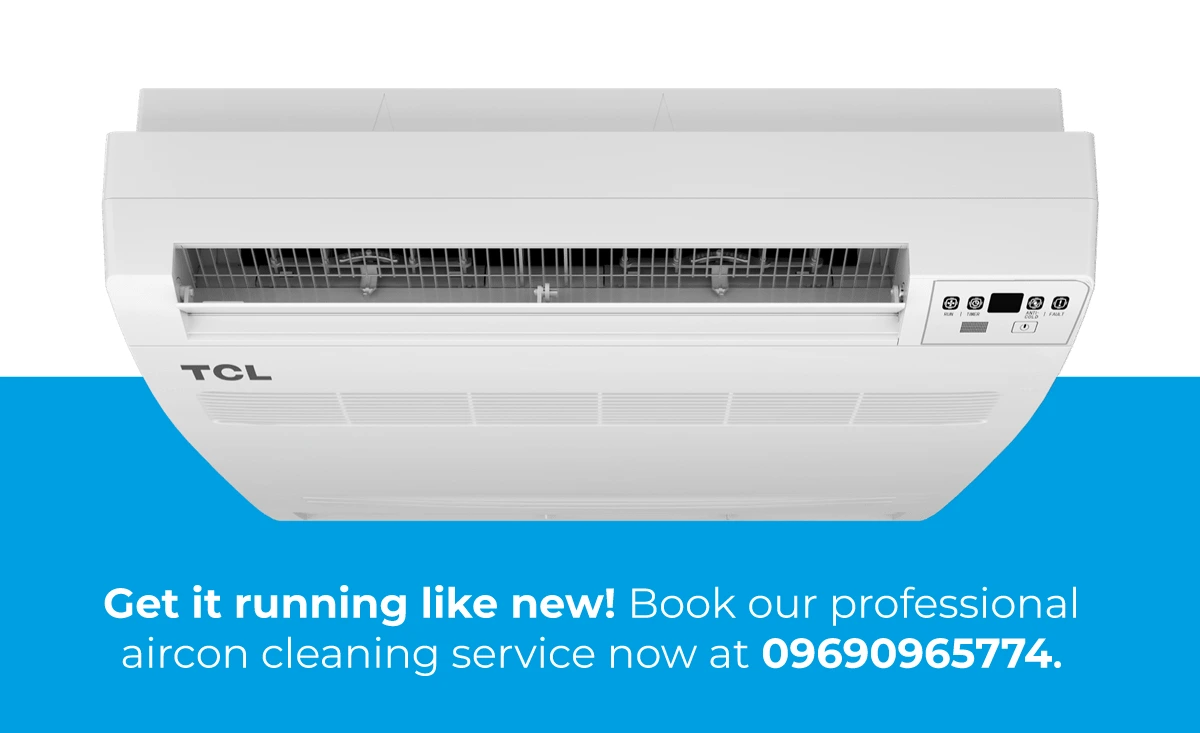
A suspended-type air conditioner is a type of split-system AC where the indoor unit is mounted directly to the ceiling. Unlike a cassette-type unit that is recessed into the ceiling, a suspended unit hangs visibly from the ceiling, distributing cool air across a wide area. This design makes it a versatile cooling solution for spaces with high ceilings or where wall and floor space is limited.
The system is split into two main components: the indoor unit, which contains the evaporator and fan, and an outdoor unit (condenser) that houses the compressor. The two units are connected by refrigerant lines and electrical wiring, allowing the indoor unit to operate with minimal noise while the heat is expelled outside. The indoor unit’s powerful fan and strategic placement allow it to push cooled air across a large room, making it highly effective for cooling commercial spaces like restaurants, retail stores, and open-plan offices.
Advantages of a Suspended-Type Aircon
The suspended-type aircon is a powerful solution, offering several key advantages that make it an ideal choice for specific environments.
1. Powerful and Wide Airflow
The primary advantage of a suspended unit is its ability to deliver powerful and wide-reaching airflow. Because the unit is mounted on the ceiling, it can circulate cooled air across a broad area, ensuring uniform cooling in large, open spaces. This is a significant benefit for places like gymnasiums, large halls, and restaurants where a consistent temperature is crucial for comfort.
2. Saves Floor and Wall Space
For businesses and homes where every square foot counts, a suspended aircon is an excellent space-saving solution. It doesn’t take up any floor space and keeps walls free for decor, furniture, or other fixtures. This design flexibility makes it a popular choice for retail stores and offices where maximizing usable space is a priority.
3. Quiet Operation
Similar to other split-type units, the noisiest components—the compressor and condenser—are located in the outdoor unit. This allows the indoor unit to operate quietly, which is a major advantage for commercial spaces like libraries, meeting rooms, and stores where a peaceful atmosphere is essential for customers and employees.
4. Easy to Access for Maintenance
Unlike a cassette unit that is hidden within the ceiling, a suspended aircon is easy to access for cleaning and maintenance. The filters and other internal components are located behind a front panel that can be easily opened, allowing for straightforward cleaning and servicing. This accessibility can help reduce maintenance time and costs.
Disadvantages of a Suspended-Type Aircon
While a suspended aircon is a great option for many, it’s not without its drawbacks. Considering these points is crucial before deciding on a purchase.
1. High Initial Cost
The upfront cost of a suspended-type air conditioner is generally higher than both window-type and standard split-type units. The specialized design and installation complexity contribute to this higher price. While the long-term energy savings often justify this cost, it can be a significant barrier for some.
2. Professional Installation Required
Installation of a suspended-type AC requires a professional with specific expertise. The process involves securely mounting the heavy indoor unit to the ceiling, proper wiring, and managing the refrigerant lines and drainage system. A poor installation can lead to refrigerant leaks, reduced efficiency, and other operational problems.
3. Can Be a Visual Intrusion
While it saves floor and wall space, a suspended unit is still a visible component in a room, hanging from the ceiling. For spaces with a minimalist or sleek aesthetic, a suspended unit might not be the most visually appealing choice compared to a discreet cassette unit.
The Importance of Regular Aircon Maintenance
Regular maintenance is non-negotiable for a suspended-type aircon. Due to its powerful airflow, it tends to pull in a significant amount of dust and debris, which can accumulate on the internal components. Neglecting professional maintenance can lead to a host of problems, including reduced energy efficiency, a drop in air quality, and potential breakdowns.
How Often Should You Clean It?
The frequency of cleaning depends on its use and environment.
- For the air filter: The air filter, located behind the front panel, should be cleaned every two to four weeks. A clogged filter restricts airflow, forcing the unit to work harder and consume more energy.
- For a professional cleaning: A full, professional cleaning should be performed at least once a year. For commercial spaces with heavy usage or in high-dust environments, a cleaning every four to six months is highly recommended to prevent mold buildup and maintain efficiency.
A Step-by-Step Guide to Basic DIY Cleaning
While a professional deep clean is essential, you can perform some simple maintenance to keep your suspended-type unit in good shape between visits.
Step 1: Turn off the Power. Always start by turning off the unit and unplugging it from the power source to prevent any accidents.
Step 2: Clean the Air Filter. Open the front grille of the indoor unit to access the air filters. Carefully remove them and wash them with warm water and a mild detergent. Let them dry completely before placing them back.
Step 3: Wipe Down the Unit. Use a soft, damp cloth to gently wipe down the exterior of the indoor unit and the vents. This removes any surface dust and grime.
When to Call in the Professionals
A DIY cleaning is a good habit, but it’s not enough to maintain a suspended aircon. The internal components—such as the fan, evaporator coils, and drain pan—are tucked away inside the unit, making them difficult to access. Over time, these parts accumulate stubborn dirt, mold, and mildew, which can seriously affect air quality and cooling efficiency.
Professional cleaners use specialized tools and solutions to perform a deep, thorough clean of every component. They can also identify and fix minor issues before they become major, costly repairs. A professional cleaning not only extends the life of your unit but also ensures that the air circulating in your space is clean, healthy, and safe for everyone.
No Time to Clean? Cleaning Services PH is Here to Help.
We know that a busy schedule can make it difficult to find the time for proper aircon maintenance. At Cleaning Services PH, we understand the importance of a clean and efficient air conditioner for your family’s health and comfort.
Our team of professionally trained technicians is skilled in handling all types and brands of air conditioning units, including complex suspended systems. We use the latest equipment and techniques to deliver a deep, thorough clean that a simple DIY job can’t match. We’ll handle the dirt and grime, so you can enjoy a healthier, more comfortable home or business.
Don’t let a dirty aircon compromise your family’s health or your unit’s performance. Book a professional aircon cleaning service with Cleaning Services PH today. Call us at 09690965774 or email us at [email protected].
Certified Aircon Expertise for Total Trust
All our cleaning is performed by certified technicians who are highly disciplined in managing every AC type. We provide the expertise and precision necessary to ensure your specific system functions optimally after every clean.
- Window Type Aircon
- Split Type Aircon
- Floor Mounted or Tower Type Aircon
- Cassette Type Aircon
- Concealed Type Aircon
- U-Shaped Window Type Aircon
- Mobile or Portable Type Aircon
Frequently Asked Questions – Suspended Type Aircon
What is a suspended type aircon?
A suspended type aircon, also called a ceiling-suspended or under-ceiling aircon, is a split air conditioning system where the indoor unit hangs from the ceiling by mounting brackets, fully exposed beneath the ceiling rather than recessed into it like a cassette unit or mounted on a wall like a standard split type. The indoor unit distributes conditioned air downward and outward into the space below, making it effective for areas with high ceilings where wall-mounted units would be too far from the occupied zone, and where ceiling recessing is not possible due to insufficient ceiling depth or structural constraints. Available in capacities typically ranging from 1.5 HP to 5.0 HP and above, suspended type aircons deliver high-volume airflow over wide areas, making them suitable for large commercial spaces that would require multiple wall-mounted units to achieve comparable coverage. Both non-inverter and inverter variants are available from major commercial aircon brands. Installation requires a structurally sound ceiling or overhead beam and must be performed by licensed technicians with commercial aircon experience.
Where is a suspended type aircon commonly installed?
Suspended type aircons are installed across a wide range of commercial and institutional settings in the Philippines where their under-ceiling hanging configuration and high-volume airflow suit spaces that other aircon types cannot serve as effectively. Restaurants and food courts with high ceilings commonly use suspended units, as the powerful downward airflow effectively cools large dining areas filled with heat from cooking, lighting, and a high density of seated customers. Retail stores, supermarkets, and shopping mall tenant spaces with open floor plans benefit from the wide air distribution coverage that reduces the number of individual units needed. Function halls, event venues, and multipurpose spaces use suspended aircons because they provide flexible, powerful cooling without interfering with wall decorations, stage setups, or floor arrangements. School classrooms, gyms, fitness centers, and sports facilities with high ceilings and large open areas are also common installations. Commercial laundries, workshops, and light industrial facilities where heat-generating equipment raises ambient temperature significantly also benefit from the high-capacity cooling performance that suspended units deliver from an overhead position.
What are the advantages of suspended aircons?
Suspended type aircons offer practical advantages that make them the right choice for large commercial and institutional cooling applications in the Philippines. Their most significant advantage is high-volume airflow capacity, allowing a single unit to effectively cool a large open area from an overhead position and reducing the number of individual units needed compared to using multiple smaller wall-mounted alternatives. This makes them a cost-effective solution where a multi-unit installation would otherwise require more refrigerant line runs, more electrical circuits, and more maintenance points. The under-ceiling hanging installation suits spaces where wall mounting is blocked by large windows, glass facades, shelving, or structural features, and where ceiling recessing is not possible because the slab is too thin or too costly to open. Installation is less invasive than a cassette system, as it does not require cutting into the ceiling structure, making it faster and more suitable for commercial fit-outs where minimizing construction work is important. Suspended units are also easier to maintain than cassette systems since the fully exposed indoor unit is accessible from below without removing ceiling panels. Inverter models are available, delivering energy efficiency benefits at the larger capacities required for commercial spaces.