Living in the Philippines means constantly battling the heat and humidity. For many homeowners and business owners, finding an efficient and aesthetically pleasing cooling solution is a top priority. While window-type and split-type air conditioners are common, the cassette-type air conditioner offers a powerful and discreet alternative, especially for modern, open-plan spaces.
This comprehensive guide will walk you through everything you need to know about cassette-type air conditioners—from their unique design and key advantages to their maintenance requirements. By the end, you’ll understand why these units are a superior choice for many, and how proper care is essential to ensure they provide clean, cool air for years to come.
What is a Cassette-Type Aircon?
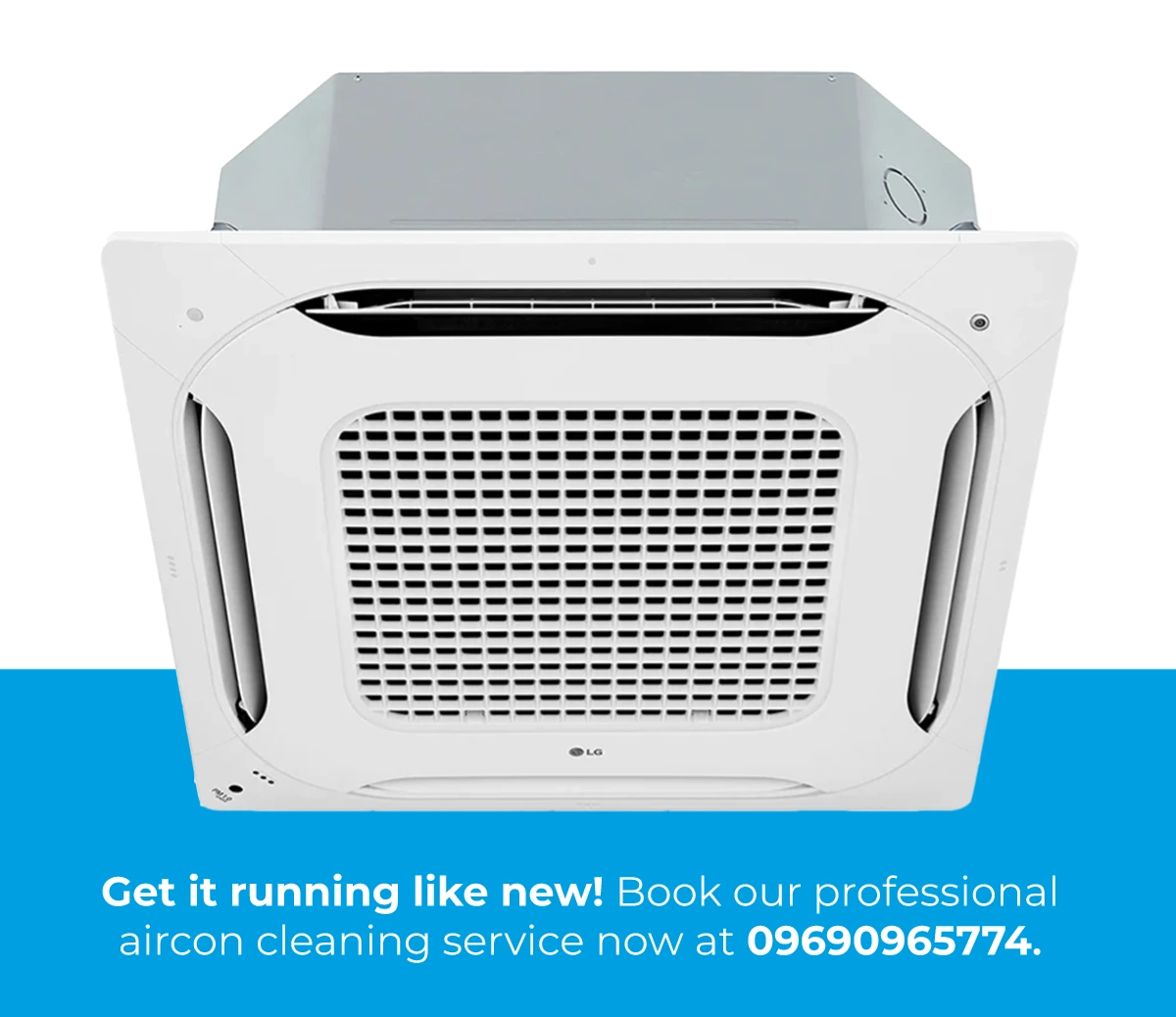
A cassette-type air conditioner is a type of split-system AC, but with a major difference in how its indoor unit is installed. The indoor unit is designed to be recessed directly into a ceiling, making it a nearly invisible part of the room’s design. The only visible part is a sleek, flat panel that sits flush with the ceiling, blending seamlessly into the space.
Like other split systems, a cassette unit consists of two main parts: the indoor unit, which contains the evaporator and fan, and an outdoor unit (condenser) that houses the compressor. The cooled air is distributed from the indoor unit through its four vents, allowing for powerful, multi-directional airflow that can cool a large area quickly and evenly.
Advantages of a Cassette-Type Aircon
The benefits of a cassette-type aircon go far beyond its sleek appearance. It’s a highly efficient and practical cooling solution for a variety of spaces.
1. Excellent Aesthetics and Space-Saving Design
This is arguably the biggest selling point of a cassette-type aircon. Because the unit is installed in the ceiling, it doesn’t take up any wall or floor space, making it perfect for minimalist designs and rooms with large windows or intricate wall decor. Its discreet design allows it to blend into the background, providing powerful cooling without compromising a room’s aesthetic.
2. Superior Air Distribution
Unlike a wall-mounted unit that blows air in one direction, a cassette aircon distributes cooled air through its multiple vents in four directions. This ensures even and powerful cooling, making it an ideal choice for large, open-plan areas like living rooms, showrooms, restaurants, and offices. The uniform airflow eliminates cold spots and ensures everyone in the room feels comfortable.
3. Quiet Operation
Similar to split-type units, the noisiest components of a cassette aircon—the compressor and condenser—are located in the outdoor unit. This separation allows the indoor unit to operate with minimal noise, providing a quiet and peaceful environment. This is a major advantage for commercial spaces like clinics, libraries, and meeting rooms where a quiet atmosphere is essential.
4. High Cooling Capacity
Cassette-type air conditioners are designed to handle the cooling needs of large spaces. They come in a wide range of cooling capacities, from small units for single rooms to powerful systems capable of cooling entire halls. Their efficient design and multi-directional airflow allow them to cool large areas more effectively than multiple wall-mounted units.
Disadvantages of a Cassette-Type Aircon
While a cassette aircon is a fantastic option, it’s not without its drawbacks. Considering these points is crucial before deciding on a purchase.
1. High Initial Cost
The upfront cost of a cassette-type air conditioner is significantly higher than both window-type and standard split-type units. The specialized design and installation complexity contribute to this higher price.
2. Complex Installation
Installing a cassette aircon requires a professional with specific expertise in ceiling installations. The process involves cutting a hole in the ceiling, proper wiring, and managing the refrigerant lines and drainage system. This is a more complex and time-consuming process than installing other types of ACs.
3. Difficult Maintenance
While the visible panel is easy to wipe down, the internal components of a cassette unit are difficult for a non-professional to access and clean. The fan, coils, and drainage system are all hidden within the ceiling, making professional cleaning a necessity rather than an option. Neglecting professional maintenance can lead to major problems.
The Importance of Regular Aircon Maintenance
Regular maintenance is non-negotiable for a cassette-type aircon. Because the unit is hidden, it’s easy to forget about, but this can lead to a host of problems. A dirty unit can harbor mold and bacteria, reduce energy efficiency, and lead to costly breakdowns.
How Often Should You Clean It?
The frequency of cleaning depends on its use and environment.
- For the air filter: The air filter, located behind the front panel, should be cleaned every one to two months. A clogged filter restricts airflow, forcing the unit to work harder and consume more energy.
- For a professional cleaning: A full, professional cleaning should be performed at least once a year. For commercial spaces with heavy usage or in high-dust environments, a cleaning every four to six months is highly recommended to prevent mold buildup and maintain efficiency.
A Step-by-Step Guide to Basic DIY Cleaning
While a professional deep clean is essential, you can perform some simple maintenance to keep your unit running smoothly between visits.
Step 1: Turn off the Power. Always start by turning off the unit and unplugging it from the power source to prevent any accidents.
Step 2: Clean the Air Filter. Open the front grille of the indoor unit to access the air filters. Carefully remove them and wash them with warm water and a mild detergent. Let them dry completely before placing them back.
Step 3: Wipe Down the Unit. Use a soft, damp cloth to gently wipe down the front panel and the vents. This removes any surface dust and grime.
Step 4: Clean the Drainage Tray. With some units, you might be able to access the drainage tray. Be sure to check your user manual. A clogged drainage tray can cause water to leak from the unit.
When to Call in the Professionals
A DIY cleaning is a good habit, but it’s not enough to maintain a cassette aircon. The internal components—such as the fan, evaporator coils, and drain pan—are tucked away inside the ceiling, making them difficult to access. Over time, these parts accumulate stubborn dirt, mold, and mildew, which can seriously affect air quality and cooling efficiency.
Professional aircon cleaners use specialized tools and solutions to perform a deep, thorough clean of every component. They can also identify and fix minor issues before they become major, costly repairs. A professional cleaning not only extends the life of your unit but also ensures that the air circulating in your space is clean, healthy, and safe for everyone.
No Time to Clean? Cleaning Services PH is Here to Help.
We know that a busy schedule can make it difficult to find the time for proper aircon maintenance. At Cleaning Services PH, we understand the importance of a clean and efficient air conditioner for your family’s health and comfort.
Our team of professionally trained technicians is skilled in handling all types and brands of air conditioning units, including complex cassette systems. We use the latest equipment and techniques to deliver a deep, thorough clean that a simple DIY job can’t match. We’ll handle the dirt and grime, so you can enjoy a healthier, more comfortable home or business.
Don’t let a dirty aircon compromise your family’s health or your unit’s performance. Book a professional aircon cleaning service with Cleaning Services PH today. Call us at 09690965774 or email us at [email protected].
Comprehensive Coverage for Every Unit
Our skillfully prepared technicians are equipped to service every make, model, and type of air conditioning unit. You can trust our team to handle your specific AC system with expert care and guaranteed precision.
- Window Type Aircon
- Split Type Aircon
- Floor Mounted or Tower Type Aircon
- Suspended Type Aircon
- Concealed Type Aircon
- U-Shaped Window Type Aircon
- Mobile or Portable Type Aircon
Frequently Asked Questions – Cassette Type Aircon
What is a cassette type aircon?
A cassette type aircon is a ceiling-mounted split air conditioning system where the indoor unit is recessed into the ceiling and distributes cool air in two or four directions simultaneously through vents built into its face panel, which sits flush with the ceiling surface. The outdoor compressor unit connects to the ceiling-mounted indoor unit through refrigerant lines and electrical wiring, following the same two-part configuration as a standard split type system. Cassette type aircons are designed for commercial and large residential spaces where multi-directional air distribution from a central ceiling position provides superior and even coverage compared to a single-direction wall-mounted unit. They are widely used in offices, hotels, conference rooms, restaurants, retail stores, and clinics throughout the Philippines. Available in both standard and inverter variants from all major commercial aircon brands, cassette units are increasingly specified for new commercial installations due to their superior energy efficiency, even air distribution, and the clean, flush-ceiling aesthetic that modern commercial interiors demand.
What are the benefits of a cassette type aircon?
Cassette type aircons offer compelling benefits that explain their widespread use in commercial settings across the Philippines. The most distinctive advantage is multi-directional airflow, with four-way models distributing cool air evenly to all corners of a room from a central ceiling position, eliminating the uneven temperature zones that wall-mounted units create in large spaces. This improves comfort for all occupants regardless of their position in the room and reduces hot spots near the perimeter. The flush-ceiling installation is a major aesthetic benefit, leaving walls completely free for shelving, displays, signage, and partitioning while contributing to a clean and professional interior finish that hotels, corporate offices, and upscale restaurants expect. Cassette units support inverter technology, delivering the energy efficiency of variable-speed compressor operation at the higher capacities required for commercial spaces, resulting in meaningful electricity savings across long daily operating hours. The central ceiling position also means that furniture rearrangement or interior modifications do not affect cooling performance, giving space planners greater layout flexibility throughout the life of the installation.
How often should cassette aircons be maintained?
Cassette type aircons in commercial environments in the Philippines require more frequent and thorough maintenance than residential units due to longer daily operating hours, larger spaces with higher cooling loads, and additional contamination from cooking grease, foot traffic, and indoor pollutants. The accessible filter panels beneath the ceiling-mounted unit should be removed and cleaned monthly at minimum, and every two weeks in high-dust or high-grease environments such as restaurants. Professional cleaning of the evaporator coil, drainage pan, and blower components should be scheduled every three to six months, with high-demand commercial settings such as restaurants requiring the more frequent three-month interval. The built-in condensate drainage pump requires particular attention, as any blockage can cause water to overflow and damage the ceiling. The outdoor condenser unit must also be inspected and cleaned at every professional service visit. All professional maintenance beyond filter cleaning should be performed by technicians experienced specifically in cassette system servicing to ensure the work is done safely and to the standard required for consistent commercial performance.