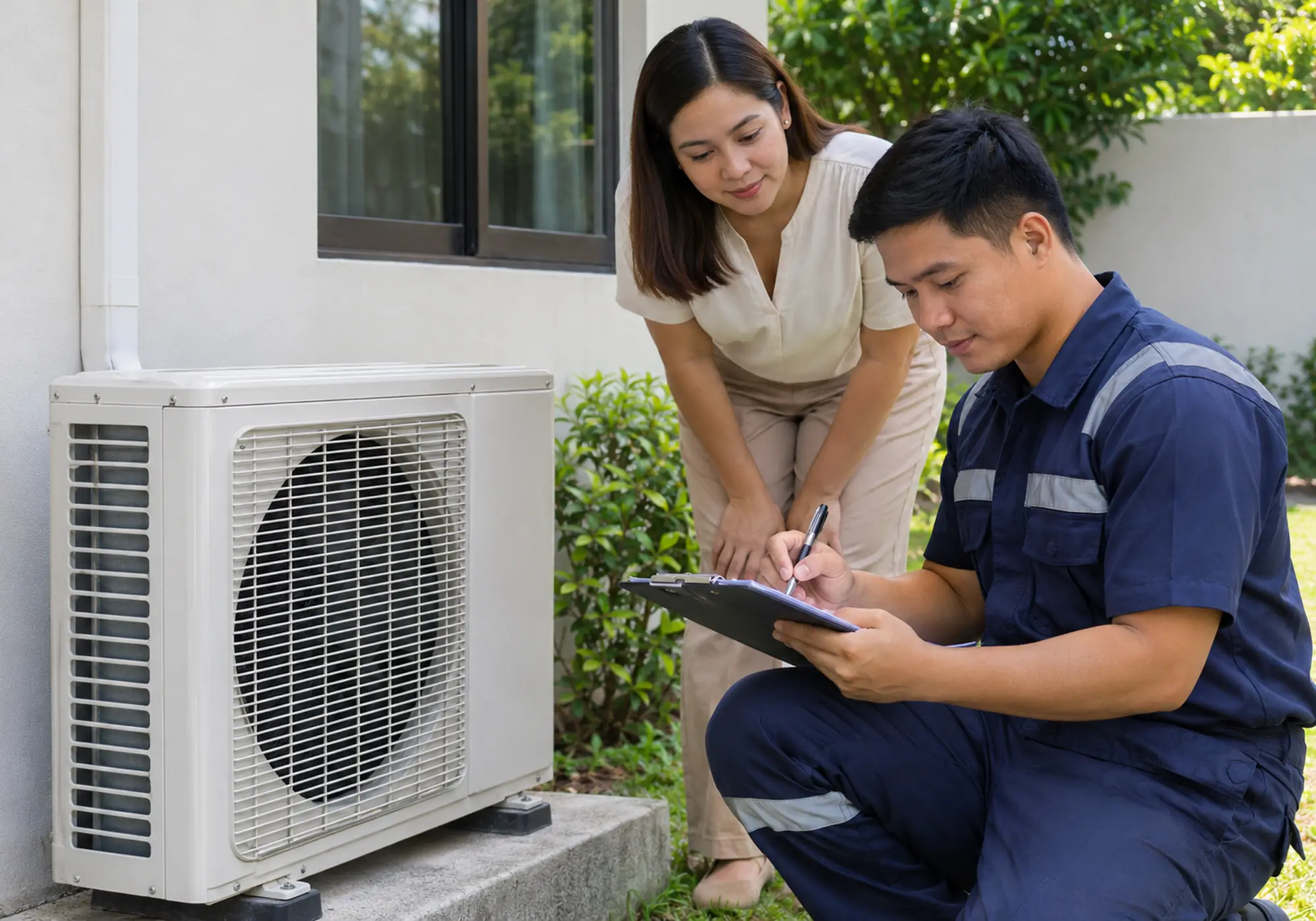
If an aircon repeatedly trips a breaker, stop trying to restart it and arrange appropriate professional assessment. Do not open the electrical panel, replace a protective device, or bypass the problem to restore cooling. Record the unit model, when power stops, and any other warning signs from a safe position. The cause needs investigation; a tripped breaker is not proof that the aircon simply needs cleaning.
Treat repeated tripping as a service issue
A protective device interrupting power is a reason to stop ordinary use and seek qualified help. Do not keep resetting it to collect more observations. If there is smoke, a burning smell, visible damage, or an immediate hazard, move away and use the appropriate emergency or building response process.
Keep other household members informed so someone else does not restart the unit unknowingly. A short note that the aircon is unavailable can be useful in a shared home. Do not reach into a wet or damaged area to switch equipment. The first useful decision is to leave the fault available for assessment rather than temporarily restoring cooling through a workaround that changes the condition the technician needs to investigate.
Describe exactly what lost power
Tell the provider whether only the aircon stopped, several outlets lost power, or the whole property was affected. If you do not know which circuit serves the equipment, say so. Do not remove a panel cover to trace wiring or identify hidden connections.
Also distinguish a utility interruption from a local equipment complaint where possible through ordinary available information. Building management may know whether other units lost power. However, a wider outage does not establish that a later aircon fault is harmless. Keep the timeline clear: when the interruption occurred, when the unit was last operating normally, and what happened when the complaint was noticed. This helps the appropriate provider plan without asking the resident to perform electrical tests.
Record timing without reproducing the fault
Useful details include whether the problem was noticed at startup or after a period of operation, the selected mode, and any visible error message. Record what you already observed. Do not repeatedly energize the appliance to see how many seconds pass before power stops.
Include recent installation, relocation, repair, or changes in the room. If other work was completed near the electrical supply, tell the responsible professional. A clear history supports an assessment but does not prove which contractor or component caused the fault. Avoid assigning blame before findings are available. The most helpful service record is factual: this equipment, these conditions, this date, and this observed result. Leave measurements and internal inspection to people with the appropriate qualifications and procedures.
Separate appliance assessment from electrical installation work
An aircon technician may need to assess the appliance, while a qualified electrical professional may need to examine the supply arrangement. Ask the provider who can undertake each part and how findings will be coordinated. Do not assume that any cleaner or installer is authorized for every electrical task.
The guide to when an aircon needs professional attention includes breaker trips within the wider repair discussion. For new equipment or changed installation, the aircon installation service page provides related planning context. Ask for a defined scope rather than an automatic cleaning booking. If the provider identifies a concern outside its competence, obtain the appropriate referral or separate service arrangement instead of accepting an improvised fix to finish the visit.
Avoid changes to breakers, plugs, and wiring
Do not replace a breaker with a larger rating, bridge a protective device, or run the unit through an improvised extension arrangement. Choosing electrical protection and connections requires an assessment of the actual equipment and installation. A generic online chart does not inspect your property.
Likewise, do not open the aircon’s control compartment, touch exposed connections, or use a meter inside live equipment. The homeowner can provide the model and ordinary service history without doing any of those tasks. If a previous workaround was installed, disclose it to the professional. Accurate information is more useful than hiding an alteration because it appeared to restore operation. Ask the assessor to explain the proposed correction and the checks needed before ordinary use resumes.
Prepare access for the right professional
Keep the route to the equipment clear and tell the provider about any known wet area, damaged fitting, or restricted electrical room. In a condo or office, contact management about authorized access and contractor requirements. Do not unlock or open restricted equipment enclosures yourself to make the appointment easier.
Have purchase, installation, and previous repair records ready. A photograph of the unit’s accessible model label can help identify it, but do not approach an unsafe location for that image. Confirm who can authorize additional work and any inspection fee before arrival. The appointment should have enough information to address the electrical complaint rather than being treated as a routine cleaning visit that unexpectedly discovers a different service requirement.
Ask how the proposed work addresses the findings
A useful explanation connects the observed fault to the recommended repair or installation correction. Ask what will be done, who will perform it, and what completion checks will be documented. If parts or electrical work are proposed, request a written scope and price before approval.
Do not judge a service by whether the unit can be made to run briefly. A temporary restart is not the same as a completed assessment. Record any unresolved finding and any instruction that the equipment remain out of use. For broader coordination, use the repair and maintenance inquiry page to discuss the appropriate next step and provider capability. Keep separate work items visible so an appliance repair does not conceal an open supply-related concern.
Keep the return-to-use handoff clear
After the agreed work, ask the professional to explain what was checked and any restrictions that remain. Keep the service report and written terms with the equipment records. Tell everyone who uses the room whether the aircon is available or still awaiting another appointment.
If tripping happens again, stop ordinary use and report the recurrence instead of treating the earlier visit as permission for repeated resets. Include the timing and the previous report. A recurring fault may require further assessment, and it should not disappear into a series of unrelated cleaning bookings. Clear handoff notes help the next provider understand the work already completed and prevent household members from unknowingly operating a unit that remains subject to an unresolved warning.
A practical example for a rented condo
Imagine a tenant notices that the aircon stops and power to the relevant area is interrupted. The tenant keeps the unit unavailable, records the time, and informs the owner and building contact. Nobody removes a panel cover or changes a breaker. The equipment model and previous installation record are sent to the provider.
The provider confirms whether appliance diagnosis, electrical assessment, or both need to be arranged. After inspection, the owner reviews the written recommendation and authorizes the appropriate work. The final handoff states whether the equipment can return to use and what follow-up remains. This sequence avoids an unsafe trial-and-error repair and keeps tenant, owner, management, and contractor responsibilities visible. It gives the complaint a defined path toward assessment without assuming that dirt or one familiar component explains every trip.
Apply the checklist to your service inquiry
For example, imagine that the aircon stopped and electrical protection operated again. Do not turn repeated resetting into a troubleshooting routine. Keep a factual record of what happened and arrange qualified assessment. Explain whether other equipment or property electrical concerns were involved without opening an enclosure to investigate.
Organize the information under these five headings before contacting the provider:
- Sequence of events
- Affected equipment
- Any smoke or burning smell
- Previous electrical work
- Appropriate professional contact
Keep the facts separate from the outcome you hope to achieve. A short, accurate description gives the booking team a better starting point than a guessed diagnosis or a request for an unspecified package. If information is missing, label it as unknown instead of filling the gap with an estimate. Let the provider explain what can be established remotely and what requires an appropriate on-site assessment.
When you are ready, use the Cleaning Services PH contact page to discuss availability and the suitable scope. Include the unit and property information relevant to this checklist, then confirm the proposed visit and any approval steps in writing. Retain the response with the equipment record so the person receiving the team can explain the same request clearly.
Frequently Asked Questions
Can my office require a contractor accreditation form?
Yes. Ask facilities staff for the required process before confirming the appointment.
Should I provide the installer with the unit’s purchase date?
Yes, if available. It helps organize equipment and warranty records.
Can a property owner join the assessment by video call?
Agree on the arrangement and an authorized local representative beforehand.
What if I cannot locate the original installer?
Ask a suitable provider whether it can assess third-party installations.
Can I request separate invoices for separate contractors?
Confirm billing arrangements with each provider before work is approved.