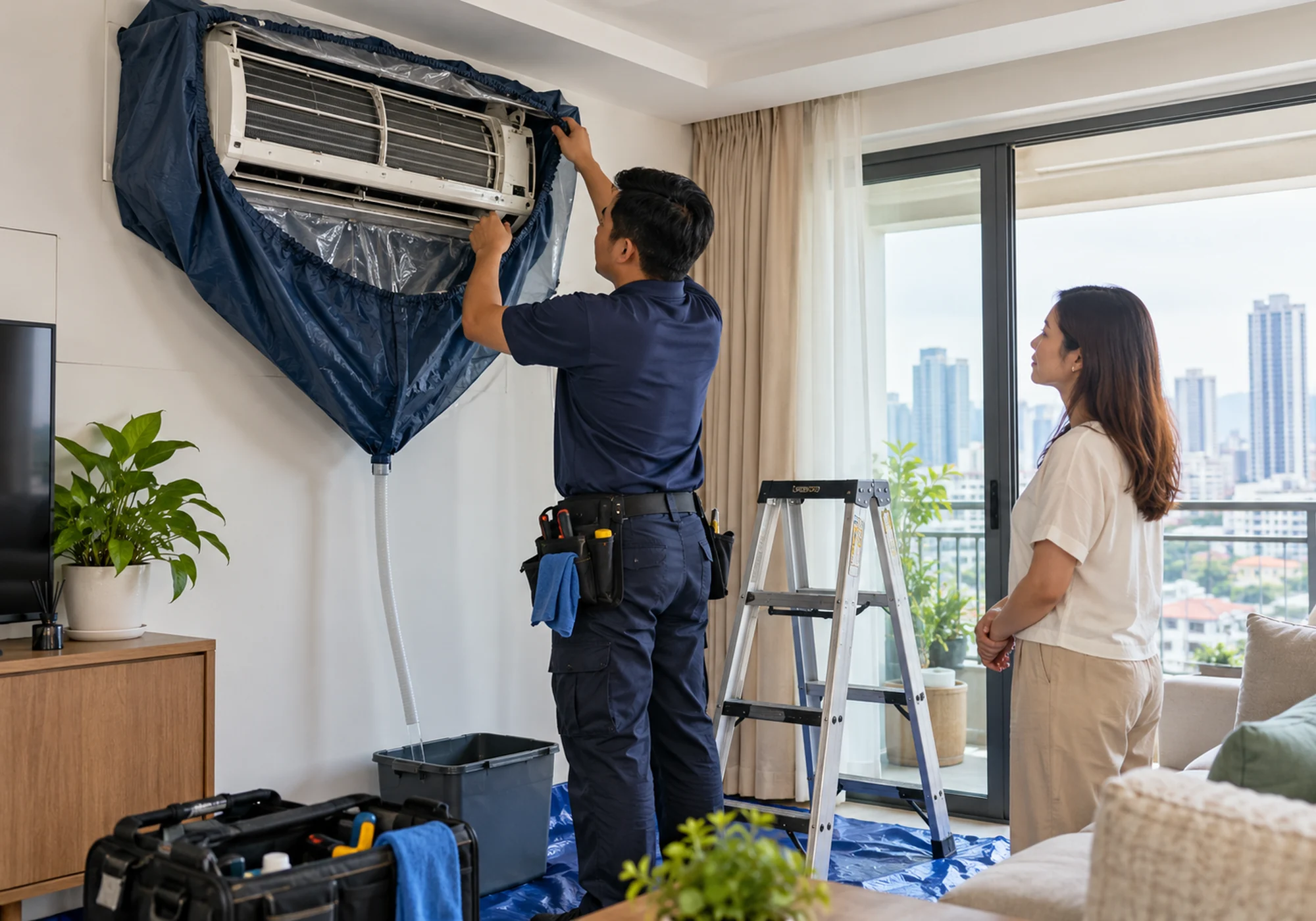
After a renovation, an aircon may need assessment because fine construction dust can reach areas beyond an ordinary room-cleaning checklist. The right service depends on whether the unit operated during dusty work, what protection was approved, and what the manufacturer recommends. Finish the dusty activities, make the work area safe, and explain the exposure before booking an aircon visit. Do not cover an operating unit or open equipment to inspect hidden parts.
Identify what work happened near the equipment
Start with a short renovation history. Record whether the project involved sanding, drilling, cutting boards, removing tiles, or opening ceilings. Note the rooms involved and roughly when the dusty stages occurred. These details help a provider understand exposure more clearly than a request that simply says the aircon needs cleaning after construction.
Also record whether the equipment was running, switched off, or protected under an installer-approved arrangement. Avoid filling gaps in your knowledge with assumptions. In a rented property, ask the contractor or caretaker what happened while you were away. The purpose is to give the technician a reliable starting point, not to prove that every speck of dust came from one worker.
Arrange protection before dusty work starts
Ask the installer or manufacturer how the specific unit should be managed during the project. Any temporary protection must suit equipment that is safely out of operation and the work being performed. A plastic sheet placed over a running aircon can interfere with airflow and normal operation. Do not improvise a cover and continue cooling the room beneath it.
Coordinate protection with the renovation contractor as part of the work plan. Decide who will confirm that protection is removed before authorized operation resumes. Keep equipment access clear and prevent materials from being stacked against indoor or outdoor components. If the project has already started, pause and obtain appropriate instructions rather than making a hurried enclosure around the equipment.
Separate room cleanup from equipment service
Post-construction cleaning addresses dust and debris on the property’s accessible surfaces. Aircon assessment addresses the equipment and any service it actually requires. A clean floor does not establish that internal components are clear, and a serviced aircon does not remove construction residue from shelving, ceilings, and nearby surfaces.
Use the post-construction cleaning checklist to organize the wider property reset. Then identify the aircon as a separate item with its own access and service requirements. This distinction is particularly useful when several contractors are involved. Each person should know which surfaces, equipment, and completion checks belong to their scope rather than assuming another team will handle everything connected with dust.
Book around the final dusty stages
Explain the renovation schedule when arranging service. If more sanding or drilling will happen immediately afterward, a provider may recommend a different sequence. The appropriate timing depends on the work and equipment; there is no single waiting period that fits every renovation. Ask for a sequence that reduces avoidable re-exposure without delaying assessment of an actual problem.
Meanwhile, distinguish planned cleaning from a fault that needs prompt attention. A burning smell, repeated electrical trips, unusual leakage, or another concerning change should not be left unreported simply because final handover is weeks away. Stop using equipment when there is a safety concern and arrange the right assessment. Renovation scheduling is not a reason to ignore a developing problem.
Document visible conditions without disassembly
Take clear photographs from a safe standing position before the service visit. Capture the room, the accessible exterior of the unit, and the general work area. If dust is visible on an accessible surface, record it without brushing debris deeper into the equipment. Tell the provider what you can see and what remains uncertain.
Do not remove panels, spray water into vents, or use a household vacuum inside equipment to investigate. Those actions can create damage or obscure the original condition. Similarly, avoid climbing onto furniture to reach a high unit. A useful record does not require close-up photographs of every internal component. The technician can determine which areas need inspection using the proper access and procedures.
Describe changes in normal operation
If the unit has been operated after the work, record any change you noticed: weaker airflow, unexpected noise, a new odor, visible water, or a different cooling pattern. Include when the change appeared and whether it affected one unit or several. Avoid repeatedly running the equipment just to recreate a concerning symptom for a video.
Renovation dust is relevant context, but it does not prove the cause of every later complaint. A changed room layout, equipment fault, installation issue, or another condition may also need consideration. Keep your description factual. Saying that airflow seems weaker since the renovation is more useful than declaring that dust has definitely damaged a particular component before anyone has inspected it.
Confirm what the aircon appointment includes
Ask whether the proposed visit covers an initial assessment, an identified cleaning scope, drainage checks, or other stated work. Have the provider explain any limitations caused by equipment location or access. If a repair is recommended, request the finding and separate approval before additional paid work begins.
The aircon cleaning service page is a starting point for an inquiry, while the post-construction cleaning service addresses the broader property. Mention that the request follows renovation so the booking can be scoped appropriately. Do not assume a general cleaning package includes dismantling equipment, specialized restoration, electrical correction, or replacement parts. Clear boundaries help both teams coordinate a useful handover.
Coordinate access in condos and occupied homes
Condo management may require contractor registration, protective coverings, service hours, and approved routes for equipment. Share these conditions before the appointment. In a family home, identify a clear working area and arrange for children and pets to stay away while work proceeds. Move ordinary loose belongings only when you can do so safely.
If scaffolding, ceiling access, exterior work, or movement of heavy items is needed, discuss who will arrange it. Do not assume an aircon technician will improvise building access on arrival. Also explain which rooms remain occupied. A realistic plan allows the provider to schedule work without using freshly cleaned surfaces as storage or introducing another team into a restricted renovation zone.
Keep a record for the renovation handover
After service, retain the unit identification, reported exposure, completed work, observations, and unresolved recommendations. Ask what the provider checked before returning the unit to normal use. If limitations prevented inspection of a particular area, keep those limitations in the record instead of treating a completed invoice as a guarantee that every component was assessed.
Finally, close the loop with the renovation team. Confirm that remaining dusty work and equipment protection arrangements are understood. Future touch-ups may require the same coordination as the main project. A clear handover helps the resident, contractor, and service provider work from the same information. It also makes any follow-up more precise if a symptom appears after the room has returned to everyday use.
Apply the checklist to your service inquiry
For example, imagine that a renovated bedroom looks clean but the aircon operated during sanding. Tell the provider about the exposure rather than assuming room cleaning addressed the equipment. Coordinate remaining dusty work and the assessment sequence. Do not add an improvised cover while operating the unit or open it to prove where the dust traveled.
Organize the information under these five headings before contacting the provider:
- Type of dusty work
- Operation during renovation
- Remaining contractor activity
- Safe access
- Any new operating symptom
Keep the facts separate from the outcome you hope to achieve. A short, accurate description gives the booking team a better starting point than a guessed diagnosis or a request for an unspecified package. If information is missing, label it as unknown instead of filling the gap with an estimate. Let the provider explain what can be established remotely and what requires an appropriate on-site assessment.
When you are ready, use the Cleaning Services PH contact page to discuss availability and the suitable scope. Include the unit and property information relevant to this checklist, then confirm the proposed visit and any approval steps in writing. Retain the response with the equipment record so the person receiving the team can explain the same request clearly.
Frequently Asked Questions
Can I use the service report in a renovation defect claim?
Ask the party handling your claim which documents it accepts; a report does not automatically establish liability.
Should I include aircon servicing in a property handover folder?
Yes. Keep the dated report with the property’s other maintenance records.
Can I request that technicians avoid photographing personal belongings?
Discuss privacy boundaries before the visit and identify areas that should stay out of photographs.
What if the renovation contractor has already left the country?
Contact the contractor through its documented channel and retain the correspondence.
Can a tenant receive a copy of a landlord’s service invoice?
Ask the landlord and provider to confirm what can be shared.