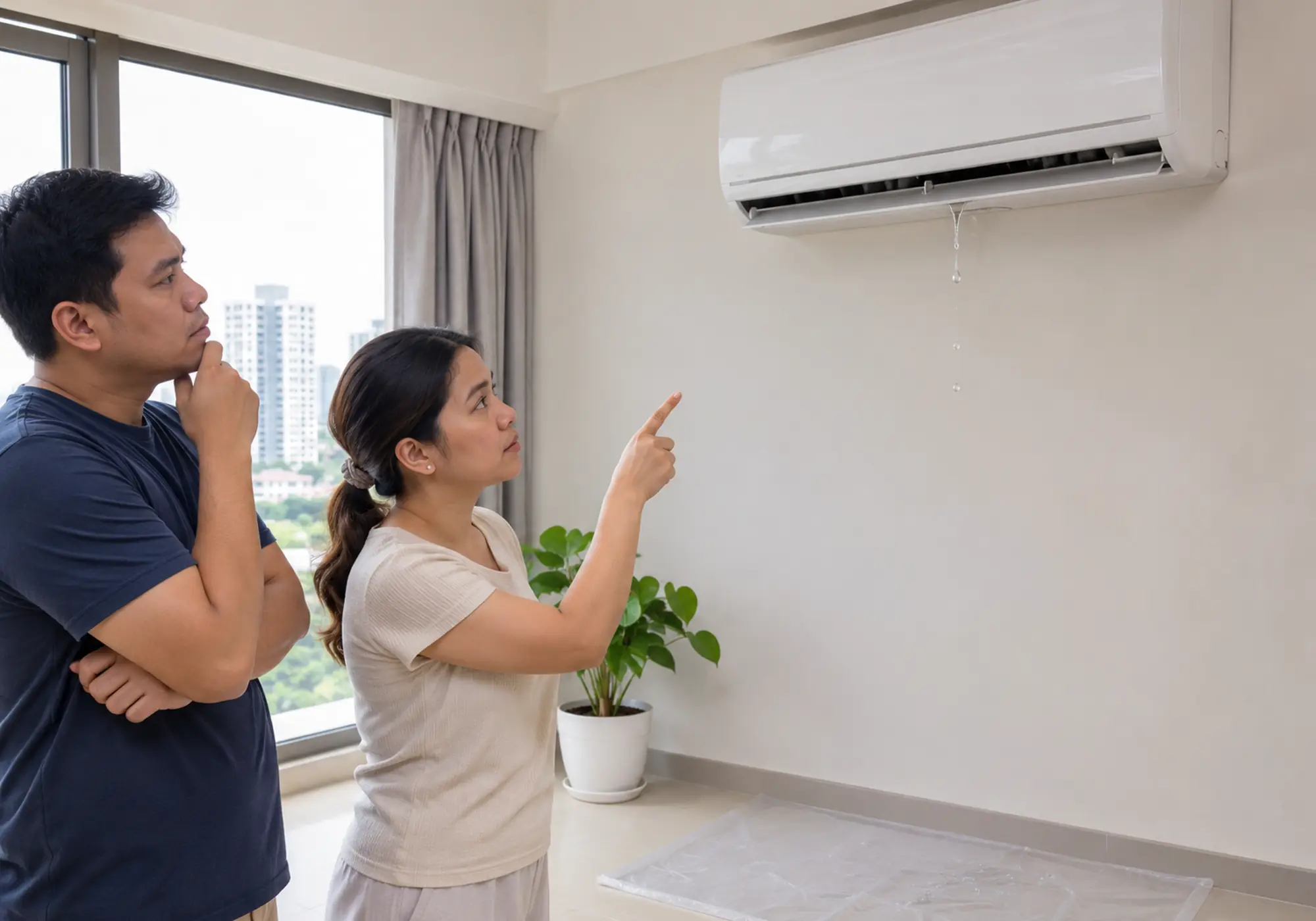
An aircon can run without cooling the room properly for several reasons. Begin with safe observations of the selected mode, room conditions, accessible airflow, and any warning signs. Then arrange an assessment if the problem persists. Running but not cooling does not, by itself, prove low refrigerant or a failed compressor. Avoid buying a refill or replacement part before the equipment and installation have been checked.
Define what not cooling means in your room
Describe whether the air feels warm at the outlet, the room cools slowly, or only one area stays uncomfortable. These are different observations. Record the room, unit type, full model, and when the complaint began. A statement that the aircon is weak gives the technician less context than a clear description of what changed.
Also note whether the problem is new or has existed since installation. If cooling changed after a renovation, a room extension, or a change in occupancy, include that information. Do not assume that an old capacity recommendation still fits a different room layout. A useful report separates the equipment’s apparent operation from the comfort you want in the actual space. That helps avoid replacing a component to solve a building or usage issue.
Check the selected mode and basic settings safely
Read the remote display and compare the selected mode with the manual. Fan-only operation, a timer, or a special program can create expectations that differ from ordinary cooling. Use only the controls intended for normal operation. Do not open control panels or bypass a setting that appears unfamiliar.
Check whether doors or windows are unintentionally open and whether the air path is blocked by furniture or curtains. Make these observations from the floor. If a setting is unclear, photograph the display for the technician rather than cycling through every button. Different models use different symbols and functions. The point is to describe the current configuration accurately, not to force the coldest possible setting or repeatedly restart a unit that is already behaving unusually.
Distinguish accessible filter care from internal cleaning
A user-accessible filter may need attention under the model’s maintenance instructions. However, do not assume every filter is washable or remove a fixed assembly. If you perform an approved basic task, record what you did and whether any part was damaged or missing.
Persistent poor cooling after ordinary care does not automatically justify a stronger chemical treatment. Internal components, installation conditions, or a technical fault may need assessment. The general aircon maintenance guide helps organize routine care, while the service-signs guide provides a broader symptom checklist. Tell the provider what was already completed so the visit does not begin with an inaccurate assumption that no maintenance has taken place. Keep cleaning and diagnosis connected through findings, rather than treating them as interchangeable services.
Look at the room conditions that changed
Strong afternoon sun, an open adjoining area, more occupants, and heat-producing equipment can affect the room’s cooling demand. Record these conditions without assigning a fixed horsepower increase yourself. A room can feel different even when the aircon has not developed a new fault.
For example, a bedroom converted into a daytime work area may now contain computers and receive direct sun during its busiest hours. Tell the assessor about that usage. Likewise, a living room opened to a dining area should not be described as the original enclosed room. This information supports an appropriate site assessment. It does not excuse a new equipment complaint, but it prevents a repair quotation from overlooking the actual job the aircon is being asked to perform.
Keep outdoor-unit observations within safe access
If the outdoor unit can be seen from stable ground or an approved accessible area, note obvious obstructions or damage without touching it. Do not climb over a railing, lean onto a ledge, or remove its cover. Photograph the location only from a safe position.
Building-controlled access may need advance coordination. Tell the provider if the outdoor equipment is behind a locked service area or above a ceiling. An incomplete access description can prevent a meaningful inspection. Also, do not judge the fault solely from whether a fan appears to run at one moment. Operating behavior varies by model and conditions. The technician needs the system context and appropriate checks, not a homeowner’s forced conclusion based on a brief view of the condenser.
Know which signs call for stopping use
Visible ice, water near electrical equipment, smoke, a burning smell, or repeated breaker trips are reasons to stop ordinary troubleshooting and obtain appropriate help. Do not keep resetting power to see whether cooling returns. Follow the equipment instructions and the property’s emergency process if there is an immediate hazard.
For a nonemergency cooling complaint, keep the symptom history concise and avoid opening electrical or refrigerant components. The guide to calling an aircon technician explains why internal faults need professional assessment. If someone recommends adding refrigerant, ask how that conclusion was reached and whether a leak or another cause was investigated. Weak cooling is a symptom, not a measured refrigerant quantity. A sound service proposal should connect its recommendation to findings on the actual unit.
Compare the proposed work with the findings
Ask the provider to distinguish cleaning, adjustment, repair, and replacement. A useful explanation identifies the observed condition, the proposed action, and the checks planned afterward. If several tasks are recommended, request a separate reason for each instead of accepting a vague all-in package.
Keep the diagnostic charge, parts, labor, access, and any follow-up visit clear in the quotation. If a part must be ordered, confirm availability and written terms. You can ask for clarification without authorizing every possible repair. Likewise, if the assessor recommends a new unit, request the basis for that decision and the installation requirements. Replacing equipment is a different purchasing decision from restoring a dirty filter, and the quotation should make that difference easy to understand.
Document the result without relying on one cold-air impression
After the agreed work, ask what was checked and what remains uncertain. Record the operating mode, room conditions, and any limitation the provider identifies. A brief sensation of cold air at the outlet does not describe the comfort of every part of the room through a full afternoon.
Follow the provider’s monitoring instructions and report a recurring complaint with dates and conditions. Keep invoices and findings together. If the problem occurs only under a particular occupancy pattern or weather condition, that detail may help the next assessment. Avoid promising yourself that every room will behave identically because the model is the same. The useful outcome is a documented improvement or a clear next step, supported by observations rather than repeated unplanned service treatments.
A practical example for a Metro Manila home
Imagine a resident reports that a bedroom aircon runs but feels ineffective in the afternoon. The record shows that the room recently became a home office, the curtains remain open, and a timer setting is unfamiliar. Those observations are sent with the model and safe photographs before the visit. They do not establish whether a fault exists.
The technician checks the equipment and discusses the room conditions before proposing work. If a repair is needed, the resident receives a defined explanation. If the issue involves settings or the changed space, that is recorded too. Afterward, the resident monitors the room under the agreed conditions rather than comparing an empty morning room with a crowded afternoon workspace. This process supports a fair assessment and avoids an automatic refill, chemical wash, or larger-unit purchase without a clear reason.
Apply the checklist to your service inquiry
For example, imagine that the aircon has been running but the room feels warmer than usual. Note the selected controls and whether the room’s use or conditions changed. Share the pattern without deciding that refrigerant is low. A provider can use the observations to determine the appropriate assessment rather than accepting an unsupported parts request.
Organize the information under these five headings before contacting the provider:
- Mode and set temperature
- Airflow observations
- Room changes
- When cooling changed
- Existing service records
Keep the facts separate from the outcome you hope to achieve. A short, accurate description gives the booking team a better starting point than a guessed diagnosis or a request for an unspecified package. If information is missing, label it as unknown instead of filling the gap with an estimate. Let the provider explain what can be established remotely and what requires an appropriate on-site assessment.
When you are ready, use the Cleaning Services PH contact page to discuss availability and the suitable scope. Include the unit and property information relevant to this checklist, then confirm the proposed visit and any approval steps in writing. Retain the response with the equipment record so the person receiving the team can explain the same request clearly.
Frequently Asked Questions
Can I use a plug-in power meter with my aircon?
Check the unit’s electrical requirements and ask a qualified professional about suitable measurement equipment.
Can my landlord request the service report directly?
Arrange consent and the correct contact details before the provider shares it.
Should I keep the original installation invoice?
Yes. It can help establish the equipment and installation history for support.
Can a technician assess a unit installed by another company?
Ask the provider and check any warranty conditions before booking.
Can I request service outside ordinary business hours?
Ask about available appointments and any additional access or scheduling charges.