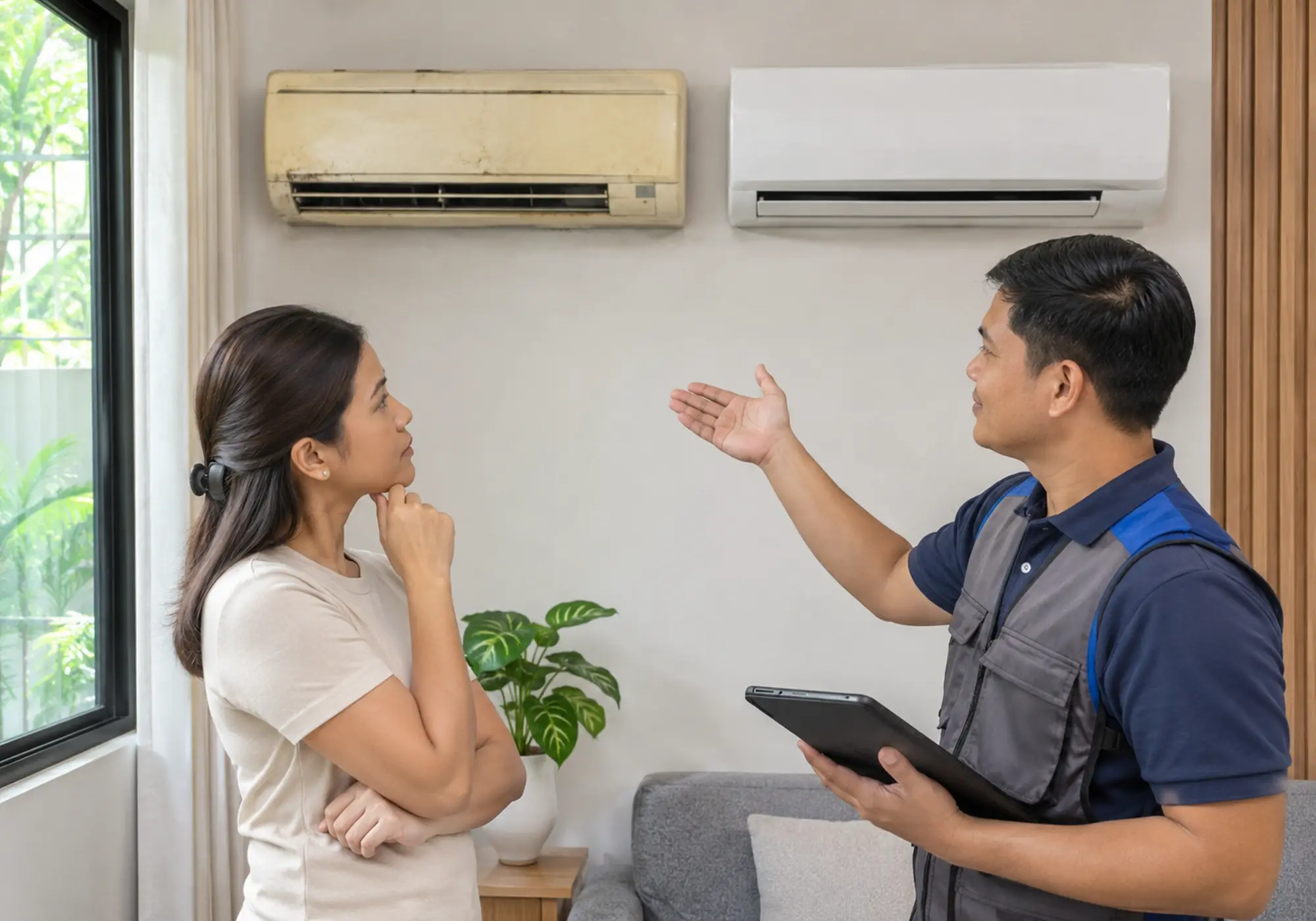
If an aircon still leaks, cools poorly, or develops a new complaint after cleaning, contact the provider with a clear before-and-after record. Stop ordinary use if there are electrical warning signs, smoke, significant leakage, or another unsafe condition. A recurring symptom does not automatically prove that cleaning caused the problem or that another wash will solve it. Ask for assessment and a defined follow-up scope.
Separate a persistent complaint from a new one
Write down what led to the original cleaning visit and what happened afterward. Did the same symptom continue, disappear briefly, or change? A unit that was already leaking before cleaning has a different history from one whose first visible leak appeared later. Neither timeline alone proves a cause.
Keep the description factual. Include the date, room, model, selected mode, and any visible message. Do not add technical conclusions that the provider has not established. If several units were serviced, identify the affected one by room and model. A generic message that all aircons are bad again can delay useful follow-up when the actual issue concerns one system. Clear identification helps the provider retrieve the correct record and decide what information is still needed.
Manage warning signs before collecting evidence
If water is near electrical equipment, smoke appears, a burning smell develops, or power protection repeatedly operates, stop ordinary troubleshooting and obtain appropriate help. Do not continue running the unit simply to record a longer video. Follow the equipment instructions and the property’s response process.
For an accessible nonemergency issue, photographs can show the location and surrounding area without opening covers. Keep people away from a wet floor and protect reachable belongings where safe. Do not touch wet electrical items or climb onto a service ledge. The quality of the evidence is less important than keeping the situation controlled. A provider can work with a concise description when a safe photograph is not possible.
Review what the original appointment included
Find the approved quotation, invoice, and service report. Check whether the visit was routine cleaning, a deeper cleaning method, inspection, or a specific repair. Do not assume every service package guaranteed resolution of every operating symptom.
The aircon quote comparison guide explains why scope and written terms matter. Compare the work listed with the concern now reported. If the original provider recorded an unresolved fault, include that note in the follow-up. If no report was supplied, request a description of the work completed. This is not about deciding blame from paperwork alone. It gives both parties a common starting point instead of relying on different memories of what the technician said during a busy visit.
Avoid changing the equipment before follow-up
Do not dismantle the unit, add household chemicals, alter pipework, or authorize a separate unrecorded treatment while waiting for assessment. Such changes can affect the condition the provider needs to review. If another professional has already worked on the unit, disclose the date and scope.
Keep ordinary operation within the model instructions and any specific advice from the provider. Do not run required components out of position to see whether airflow improves. Similarly, do not reset an unexplained warning just to clear the display before the return visit. An accurate record includes what was observed and what actions were taken. That helps the next assessment distinguish a continuing issue from changes made after the original service.
Send a concise callback request
A useful message can state: the unit and room, original service date, original concern, current symptom, when it happens, and available photographs. Then ask whether a return assessment is appropriate and what terms apply. Include the invoice or job reference rather than sending several disconnected messages.
For example: our bedroom split unit was cleaned on the stated date; the original complaint was weak cooling; the room remains uncomfortable under the same use conditions; no new treatment has been attempted. Request advice on the next assessment. Keep personal availability and building restrictions in the same message. The provider can then respond to a defined case rather than guessing which visit or unit the customer means.
Clarify callback coverage before approving extra work
Ask whether the return visit falls within the written service terms and whether a diagnostic fee applies. Do not assume that every later fault is covered, but do not accept an unexplained new charge without clarification either. The specific agreement should guide the discussion.
If a new repair is recommended, request findings, scope, price, and authorization requirements before it begins. Cleaning and repair should remain distinct decisions. The cleaning-method comparison guide can help clarify why another chemical treatment needs a reason. A recurring complaint may need a different kind of assessment rather than repetition of the original method. Record the explanation so future follow-up is based on the work actually approved and completed.
Coordinate the return visit around access
Prepare the room and management approvals as carefully as for the first appointment. The aircon preparation checklist covers useful access and household arrangements. Tell the provider if the outdoor area, ceiling route, or required contact will not be available.
Make sure the person receiving the technician can explain the current complaint and approve only the agreed scope. If the owner is away, arrange a clear authorization process rather than leaving a helper to decide about expensive parts. Keep the original service record available. A return appointment can be unproductive when the provider reaches the property but cannot access the relevant equipment or speak to someone who knows what happened after the first visit.
Document the follow-up result
Ask what was found, which work was completed, and whether any observation remains unresolved. Keep the new record with the original report so the sequence is easy to follow. If the provider cannot reproduce an intermittent issue, retain that limitation rather than recording the case as permanently solved.
Follow any agreed monitoring instructions and report a recurrence with dates and conditions. Avoid testing the unit in unsafe circumstances. Also, keep room damage and equipment service separate. A corrected leak does not automatically repair an affected wall or floor. If another building contractor is required, record that responsibility and contact. A useful closeout gives the household a clear status rather than another verbal assurance that everything should now be fine.
A practical follow-up after a cleaning visit
Imagine two units were cleaned, but only the bedroom unit still cools poorly. The resident identifies that room, attaches the invoice, and describes the same operating conditions before and after service. No new refrigerant request or chemical treatment is assumed. The provider confirms the return-assessment terms and access needs.
After inspection, the resident receives a written explanation of the findings and separately approves any additional work. The service history now shows both visits and the unresolved or completed items. This approach is useful because it protects the evidence, avoids unsupported accusations, and keeps payment decisions clear. It also gives the provider enough information to investigate the particular complaint instead of repeating a generic cleaning package across every unit in the home.
Apply the checklist to your service inquiry
For example, imagine that a new symptom appears after a cleaning appointment. Report the timing and the specific unit to the original provider. Describe what changed without claiming the visit caused the problem before assessment. Keep the original scope and photographs available so the follow-up can address the relevant history.
Organize the information under these five headings before contacting the provider:
- Original visit date
- Unit identifier
- Symptom and timing
- Original approved scope
- Provider’s follow-up instructions
Keep the facts separate from the outcome you hope to achieve. A short, accurate description gives the booking team a better starting point than a guessed diagnosis or a request for an unspecified package. If information is missing, label it as unknown instead of filling the gap with an estimate. Let the provider explain what can be established remotely and what requires an appropriate on-site assessment.
When you are ready, use the Cleaning Services PH contact page to discuss availability and the suitable scope. Include the unit and property information relevant to this checklist, then confirm the proposed visit and any approval steps in writing. Retain the response with the equipment record so the person receiving the team can explain the same request clearly.
Frequently Asked Questions
Can I ask another company to review the report?
Yes. Share the relevant findings with your consent and check any existing service terms.
Should an office open an internal maintenance ticket?
Follow the organization’s process so the complaint and contractor response stay recorded.
Can a booking contact be changed for the return visit?
Tell the provider in advance and identify who can authorize work.
What if the invoice has the wrong unit location?
Ask for a corrected record before it creates confusion in future service history.
Can I request the follow-up advice by email?
Ask which written communication channel the provider supports.