A restaurant closing cleaning checklist helps the team finish the day with a clean, orderly dining area and a clear handoff to the next shift. Dining rooms combine food crumbs, spills, fingerprints, furniture, service stations, and high traffic. A consistent closeout routine reduces the chance that small tasks are forgotten after a busy service and makes it easier to report repairs before opening again.
This guide focuses on dining and front-of-house closeout. Food-preparation areas and food-contact surfaces must follow the restaurant’s food-safety procedures and local requirements. For grease on nearby kitchen surfaces, review the kitchen grease and appliance cleaning guide. For larger commercial resets, consider one-time commercial cleaning or commercial cleaning support and agree on the exact scope.
Assign zones and closing roles
Divide the dining area into zones such as entrance, host stand, tables, booth seating, bar or beverage station, service counters, restrooms, and the route to the kitchen. Assign a staff member or role to each zone, then name one person to complete the final walkthrough. A zone map is useful in a large dining room where the last table or corner booth can otherwise be missed.
Decide which tasks happen during service and which wait until guests have left. Clearing crumbs or wiping an obvious spill between seatings is different from moving chairs for a full floor sweep. Keep cleaning tools out of food service paths and store them away from guest areas. The closing sequence should fit the restaurant’s operating policies, security procedures, and expected staff hours.
Clear tables and reset dining furniture
Remove dishes, menus, condiment containers, and waste from each table. Follow the restaurant’s rules for sanitizing food-contact surfaces, including which product is approved and how long it must remain wet if the label requires a contact period. Use clean cloths designated for dining surfaces and change them when visibly soiled. Do not use a cloth that has been used on floors or restroom fixtures.
Inspect tables and chair backs for sticky spots, crumbs, and spills. Clean compatible surfaces with the approved method, then let them dry before resetting. Check booth seams and under cushions for crumbs without cutting, pulling, or damaging upholstery. Return chairs to their standard position and inspect the floor beneath them. If a table wobbles, a chair is damaged, or upholstery is torn, tag it and notify the manager rather than attempting an unauthorized repair.
Clean floors from the edges inward
Collect loose debris before mopping or using a wet method. Move only light, movable furniture that staff are trained to handle, and maintain clear exits. Pay attention to corners, under table edges, and high-traffic paths from the entrance to service areas. Select floor products suitable for the material and follow dilution and drying directions. Do not leave a wet floor open to foot traffic without a visible warning or barrier.
Grease tracked from service areas can make flooring slippery. Use the restaurant’s approved response for spills, and alert a manager if the floor remains slick after cleaning. Avoid mixing chemicals or applying a product intended for a different floor type. Clean floor drains only according to the site procedure and do not push debris into them. At close, allow the floor to dry as much as practical before the next shift or opening team enters.
Wipe service stations and guest touchpoints
Service stations may hold trays, water pitchers, menus, utensils, and order devices. Clear items to their assigned storage, clean the counter and exterior surfaces, and restock only clean, dry supplies. Do not place clean utensils on a surface that has not completed the restaurant’s required cleaning step. Follow the site procedure for handling devices and electrical equipment; never spray liquid directly onto screens, terminals, or cords.
Wipe door handles, host stand surfaces, chair arms, and other high-use guest touchpoints with compatible products. Keep liquid away from electronics, registers, and power strips. For glass partitions or mirrors, use the appropriate cloth and cleaner, then inspect from different angles for streaks. Report loose handles, cracked glass, unstable furniture, or a fixture that needs repair. The closeout log should make those issues visible to the opening manager.
Coordinate dining-area restrooms
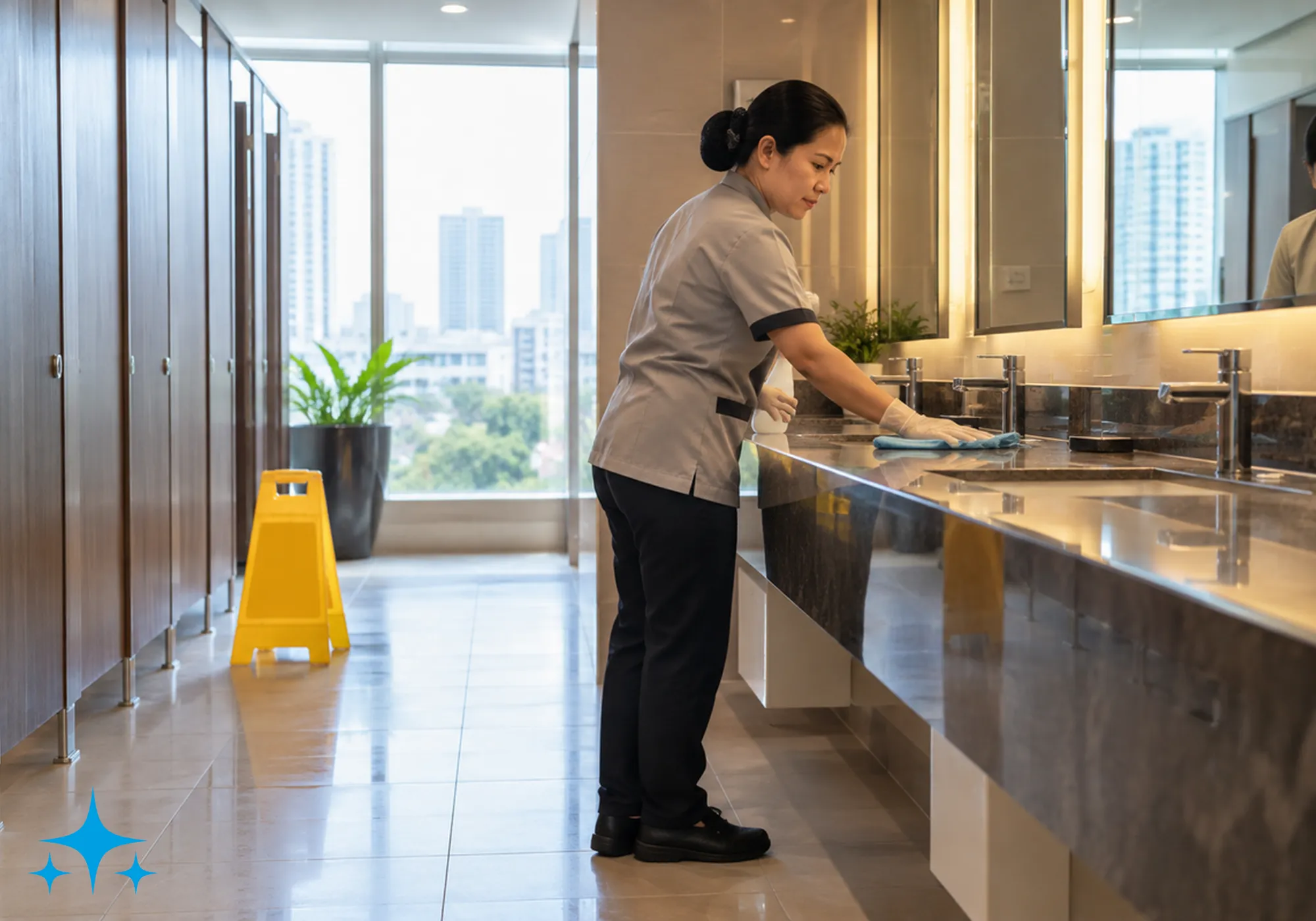
Restrooms need their own task list and dedicated tools. Check fixtures, counters, mirrors, floors, waste bins, and supplies, following the restaurant’s cleaning and disinfection policies. Use a separate set of cloths and tools from the dining room and kitchen. Store all products securely after use and keep labels accessible to trained staff.
Check for leaks, blocked drains, broken dispensers, or persistent odor. Note the issue and contact the manager or maintenance provider. Do not pour unapproved chemicals into a drain or attempt a plumbing repair as part of routine cleaning. For more detailed task prompts, adapt the site’s restroom cleaning checklist for busy workplaces to the restaurant’s own procedures and applicable requirements.
Handle linens, menus, and reusable items
Collect table linens, napkins, and reusable cloth items in the designated container. Keep used items separate from clean ones and follow the restaurant’s laundry procedure. Do not leave damp linens balled up overnight. Menus and reusable table markers need a cleaning method suitable for their material; paper menus, laminated sheets, and electronic menus are not interchangeable.
Inspect reusable items for damage or residue, then return only clean, dry items to storage. If a menu has food stains, follow its material-specific method or replace it according to house policy. Do not use an unapproved spray on printed material or electronics. A clear “clean / used” storage distinction keeps the opening team from having to guess whether an item has already been serviced.
Empty bins and control waste
Remove dining-room waste using the site’s disposal route and sorting rules. Replace liners and wipe bin lids or exterior surfaces when needed. Do not overfill containers or leave food waste near guest access points. Take waste to the approved location without dragging leaking bags through a clean dining room. If the bin area is shared with other tenants, follow building rules about timing, odors, and sorting.
Check that recycling, compost, and general waste are separated according to the restaurant’s policy. If a container is damaged or repeatedly overflowing, report its capacity as an operations concern. Clean the area around the bin, then wash hands as required before handling other tasks. Store waste carts and cleaning equipment in their assigned place so that they do not block exits, fire equipment, or food service routes.
Check windows, entry, and presentation details
At close, inspect the entrance glass for obvious fingerprints or weather marks and clean it with a compatible product if the task is in scope. Check that doormats are clean, dry, and lying flat. Remove loose debris at the threshold and verify that door tracks or nearby surfaces do not contain excessive grit. For exterior glass or work at height, follow the building’s approved contractor process rather than attempting unsafe access.
Reset chairs, menus, and décor to the restaurant’s normal opening layout. Do not move plants, artwork, candles, or fragile decorations unless the supervisor has given clear directions. Check for spills beneath the host stand and along wall edges. A consistent presentation supports the opening team while preserving safe access to walkways and emergency exits.
Close with a checklist and handoff
The final walkthrough should confirm that every assigned zone is complete, floors are safe, supplies are stored, and maintenance concerns are recorded. Use initials or a digital sign-off to show who completed each zone. Add an exception note if a task could not be done because a room was occupied, a product was unavailable, or a repair issue made it unsafe. Do not mark an incomplete task as finished for the sake of a blank checklist.
Communicate important issues to the opening manager: a broken chair, a leak, an unusual odor, missing supplies, or a spill requiring follow-up. A short handoff is more useful than a long narrative. If an external cleaning team supports the restaurant, state which areas are included, when access is allowed, how keys or alarms are managed, and which tasks remain with restaurant staff. Clear ownership keeps the dining area ready and reduces repeated work.
Review the routine after busy periods
Large bookings, special events, and seasonal menu changes can alter dining traffic. Review the checklist after unusually busy periods and identify where the normal closeout was insufficient. If the team repeatedly misses a detail, adjust staffing, timing, or task ownership instead of adding an unclear reminder. Ask the closing and opening teams where handoffs fail; they may notice different needs.
Keep the plan practical. The dining room does not need every possible deep-cleaning task every night, but visible soil, safe floors, clean guest touchpoints, and a useful handoff should be reliable. Schedule periodic detailed work for areas that need it, and coordinate any specialized cleaning with the proper provider. A checklist is most effective when it matches the restaurant’s workflow and can be completed consistently by the people assigned to it.
Frequently Asked Questions
What should a restaurant dining room closing checklist include?
Include table and chair resets, approved surface cleaning, floors, waste, service stations, entry glass, and restroom checks, plus a final handoff.
Who should clean tables and chairs after the last seating?
Assign the task to the closing team member responsible for that zone. Follow the restaurant’s approved procedure for table surfaces and food-contact areas.
How should restaurant staff handle a slippery floor at closing?
Mark or block the area, clean using the approved floor method, and keep people away until dry. Report any recurring slickness to the manager.
How often should dining-area restrooms be checked?
Set check frequency based on traffic, fixture use, and restaurant policy. Record checks and restock supplies as needed.
What information belongs in a restaurant cleaning handoff log?
Record completed zones, time or shift, supply needs, unfinished tasks, and maintenance concerns so the opening team knows what needs follow-up.