An office aircon maintenance contract should identify the units covered, visit scope, frequency, access arrangements, reporting, approval limits, and the response commitments actually offered. A list of visits alone does not explain what happens when a fault is found. Separate cleaning and preventive care from repairs, parts, refrigerant work, and emergency attendance. Compare providers using the same asset list and written service requirements.
Begin with an accurate equipment register
List each indoor unit by asset ID, room or zone, model, and system connection where known. Record outdoor-unit locations and access restrictions without asking office staff to enter unsafe areas. Similar indoor units can have different installation or service requirements, so a count alone may not describe the work.
Note operating patterns, occupied hours, and any critical zones. A meeting room used occasionally differs from a continuously occupied workspace. Do not promise that one routine frequency fits every asset. The provider should review equipment instructions, condition, and use when defining the schedule. A useful register gives both parties the same starting population and prevents a contract for ten units from becoming ambiguous when a replacement or additional system appears later.
Define the work included at each visit
State the agreed cleaning and inspection tasks in ordinary language, with model-appropriate procedures left to competent personnel. Identify whether indoor and outdoor components are included and which locations require separate arrangements. A phrase such as complete preventive maintenance needs a written scope behind it.
The commercial aircon care article explains the broader workplace context. Use the contract to turn that context into deliverables rather than repeating general benefits. Ask what reports, observations, and completion checks accompany each visit. Also identify tasks excluded from ordinary maintenance, such as repairs, major disassembly, special access, or building infrastructure work. Clear exclusions are useful when paired with an approval process, so a technician can report a finding without automatically expanding the job.
Set frequency through equipment and use
Discuss the model instructions, operating hours, observed condition, and site environment with the provider. Keep routine visit timing distinct from reactive attendance after a reported fault. A contract can contain both, but they should not be confused.
The maintenance checklist provides planning context, while the actual agreement should establish the asset-specific routine. If the workplace has seasonal occupancy or hybrid attendance, explain that pattern. Review the schedule when equipment or use changes instead of keeping a fixed calendar simply because it was easy to price initially. A useful maintenance arrangement records why the visits are scheduled and how findings may lead to a revised recommendation. It does not guarantee that every fault will be prevented between appointments.
Separate repairs and parts approval
Identify who receives findings and who can approve additional spending. The contract should explain how a quotation is requested, what information accompanies it, and whether the provider waits for written authorization. Do not leave a cleaner or receptionist to approve major component work by default.
Ask whether diagnostic attendance, parts, return visits, and specialist work have separate terms. A maintenance fee may not cover every repair. Use the service quote comparison guide to check that offers describe the same scope. Keep a distinction between an observation, a recommendation, and an approved job. This makes the service history useful and helps procurement understand why a maintenance visit generated a separate proposal without assuming the contractor has already been authorized to perform it.
Define response commitments realistically
If the provider offers a response arrangement, write down what it means. Acknowledging a request, arriving on site, diagnosing a fault, and completing a repair are different milestones. Parts availability and restricted access can affect the later stages.
Do not describe a generic service inquiry as a guaranteed emergency response. Confirm the supported hours, contact channel, escalation path, exclusions, and any additional charges. If the business needs specific continuity arrangements, discuss them before signing rather than assuming every maintenance provider offers the same service level. A clear commitment is more useful than an impressive phrase that neither party can measure. The agreement should state what the provider actually undertakes and what information or access the office must supply.
Plan access and disruption by zone
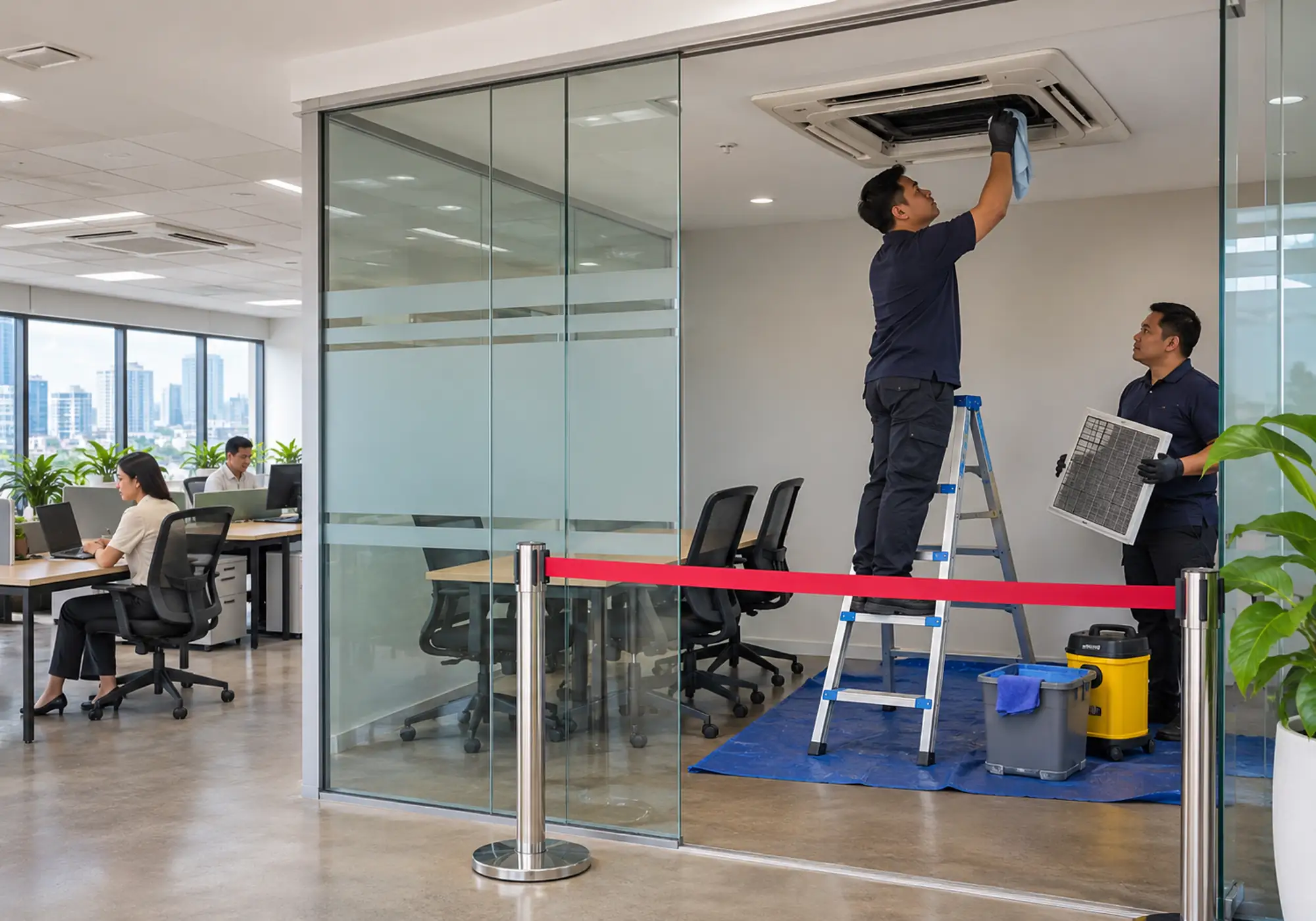
Coordinate contractor entry, work permits, outdoor access, ceiling routes, and affected rooms with facilities staff. Identify where equipment and tools can be placed and how occupants will be informed. Keep required emergency and pedestrian routes clear under the building’s procedures.
A phased plan can isolate one work area while other agreed zones remain available, but the provider and management must assess the arrangement. Do not assume a shared system can be serviced one room at a time without considering its design. Record which assets will be unavailable and who authorizes reopening. This turns after-hours service from a vague promise into a workable plan with access contacts, occupied areas, and clear handoff responsibility.
Require useful visit reports
A report should identify the asset, date, agreed scope, work completed, findings, and unresolved recommendations. Ask for photographs where appropriate and permitted by workplace privacy rules. A ticked checklist without equipment identification is difficult to use when several similar units serve different floors.
Keep completed work separate from deferred repairs. If access prevented part of a visit, record the limitation rather than marking the whole asset serviced. Agree where reports are stored and who reviews them. The maintenance contract should support an ongoing equipment history, not merely a monthly invoice. A consistent record helps facilities compare recurring complaints, track approved work, and plan future procurement without relying on a contractor’s memory of an undocumented conversation.
Review commercial terms and changes
Confirm the covered period, payment schedule, cancellation arrangements, and process for adding or removing assets. Ask how a replaced unit or changed access requirement affects the price. Keep the current asset register attached to the agreement rather than treating an old unit count as permanent.
Also review responsibilities for utilities, permits, parking, and any required office representative. A lower quoted fee may exclude arrangements included elsewhere. Do not assume the most expensive offer contains everything either. Compare the actual written terms and clarify uncertain items. A useful agreement can evolve with the workplace while preserving a clear record of what changed, who approved it, and which visits or services the current payment covers.
A practical comparison for a small office
Imagine an office comparing two annual maintenance offers for the same systems. One quote lists visits only, while the other identifies indoor and outdoor scope, access responsibilities, reports, and repair approval. The office asks both providers to respond to the same register and requirements before deciding.
Facilities then sets a contact channel, asset labels, phased access plan, and report-review process. Any response commitment is written in terms the provider actually offers. This makes the agreement easier to manage through staff changes and equipment replacements. It also keeps a maintenance contract from being mistaken for unlimited repairs or guaranteed continuous cooling. The result is a defined working arrangement with traceable visits, clear approvals, and a useful history for the office’s particular assets.
Apply the checklist to your service inquiry
For example, imagine that an office receives an annual maintenance proposal with a single bundled price. Ask which assets, visits, tasks, reports, and exclusions the price covers. Confirm the process for findings outside routine maintenance. A contract is easier to manage when both sides can identify a completed task and an item still awaiting separate approval.
Organize the information under these five headings before contacting the provider:
- Asset list
- Included visit scope
- Access windows
- Reporting requirements
- Approval for additional work
Keep the facts separate from the outcome you hope to achieve. A short, accurate description gives the booking team a better starting point than a guessed diagnosis or a request for an unspecified package. If information is missing, label it as unknown instead of filling the gap with an estimate. Let the provider explain what can be established remotely and what requires an appropriate on-site assessment.
When you are ready, use the Cleaning Services PH contact page to discuss availability and the suitable scope. Include the unit and property information relevant to this checklist, then confirm the proposed visit and any approval steps in writing. Retain the response with the equipment record so the person receiving the team can explain the same request clearly.
Frequently Asked Questions
Can procurement require a supplier onboarding review?
Yes. Share the organization’s requirements before requesting a final proposal.
Can a quotation use our company’s registered billing name?
Provide the exact details before the quotation is issued.
Can photographs exclude employees and documents?
Agree on privacy limits and necessary equipment views before the visit.
Who should retain contract versions?
Follow the organization’s procurement and document-control process.
Can a branch office use the same template?
Use the template as a starting point, then confirm each site’s equipment and service requirements.