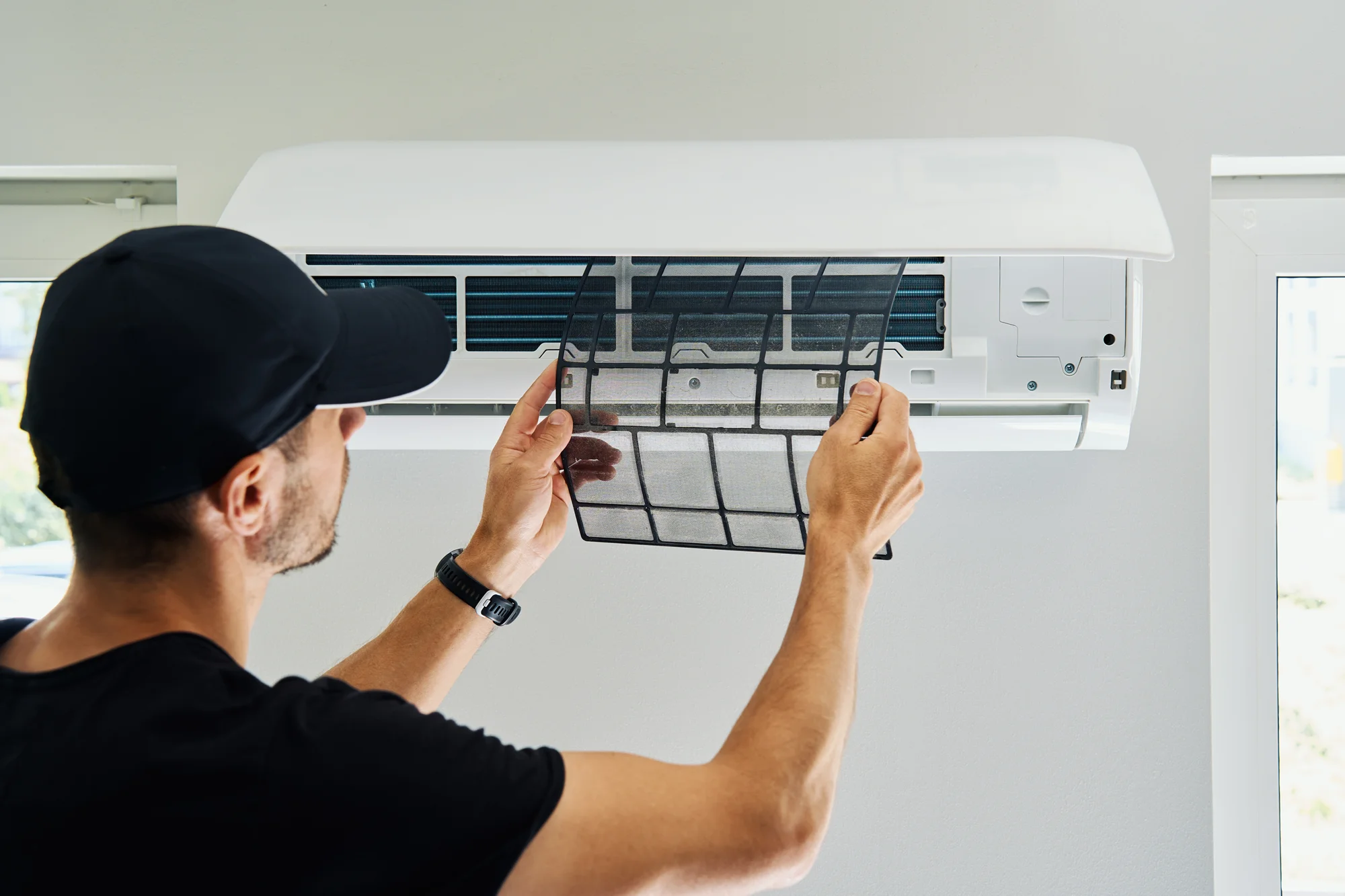
The Unsung Hero of the Philippine Economy
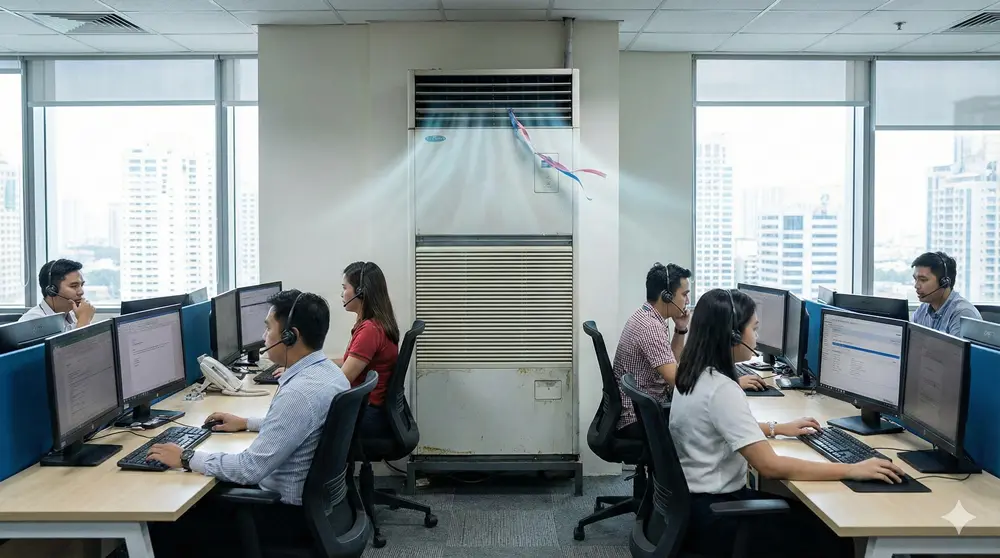
Picture the typical Metro Manila office at 9:00 AM on a Tuesday. Phones are ringing, keyboards are clacking, and teams are huddled in conference rooms strategizing for the quarter. It is a scene of industry and focus. But underlying this productivity is a critical infrastructure component that goes largely unnoticed until it fails: the air conditioning system.
In a temperate country, air conditioning might be considered a seasonal amenity. In the Philippines, however, it is the lifeblood of business operations. Whether you are running a high-intensity BPO in Ortigas, a bustling SME in Makati, or a retail space in Quezon City, your air conditioning system is not just making the air cold—it is making work possible.
The tropical climate of the Philippines, characterized by intense heat and suffocating humidity, is a relentless adversary to productivity. We live in an environment where the ambient temperature frequently hovers above 32°C, with humidity levels that make the air feel heavy and exhausting. Without effective climate control, the modern office grinds to a halt. Computers overheat, tempers flare, and focus evaporates.
Yet, despite its critical importance, the office AC system is often the most neglected asset on the balance sheet. It is usually relegated to a “fix it when it breaks” maintenance strategy. This reactive approach is a silent profit killer.
For business owners and facility managers, it is time to shift the perspective. Your office AC is working significantly harder than the unit in your bedroom. It faces a unique set of stressors and demands that require a professional, commercial-grade maintenance strategy. Ignoring this reality doesn’t just risk a warm room; it risks your bottom line, your employee health, and your operational continuity.
The Commercial Difference: Why Your Office AC Suffers More
To understand why commercial cleaning is essential, we must first distinguish the operational reality of an office unit versus a residential one.
In a home setting, an air conditioner might run for 8 to 10 hours a day, usually at night, cooling a room with two or three occupants who are largely stationary (sleeping).
In a commercial setting, particularly in the Philippine context, the demands are exponential:
- The Biological Load: An office is a high-density environment. You have dozens, perhaps hundreds, of employees in a confined space. Each human body radiates heat (about 100 watts at rest) and exhales carbon dioxide and moisture. Your commercial AC isn’t just fighting the sun outside; it is fighting the biological heat load generated inside.
- The “Door Traffic” Factor: In a retail store or a busy office, doors are constantly opening and closing. Every time a door opens, a volume of conditioned, expensive dry air escapes, and a volume of hot, humid, dirty outdoor air rushes in. The AC compressor must kick into overdrive to re-stabilize the temperature.
- The Electronics Heat Island: Offices are filled with computers, servers, printers, and photocopiers, all of which generate significant heat. Server rooms, in particular, require 24/7 precision cooling.
- Urban Pollution Infiltration: Most business districts in the Philippines are located in areas with high vehicular pollution. The intake air for commercial buildings often contains higher levels of soot, exhaust particulates, and construction dust than a residential subdivision.
This combination of factors means that commercial air conditioners accumulate dirt, grime, and biological growth at a rate two to three times faster than residential units. A “once a year” cleaning schedule, which might suffice for a guest bedroom, is a recipe for disaster in a business environment.
The Financial Argument: The “Silent Tax” on Your P&L
For a business owner, every expense must be justified by Return on Investment (ROI). Aircon cleaning is often viewed as a sunk cost—a janitorial expense. However, when viewed through the lens of energy efficiency and asset management, it is actually a cost-saving mechanism.
- The Meralco Multiplier Electricity is one of the top operational expenses for any Philippine business. We have some of the highest power rates in Asia.
When a commercial AC’s evaporator coil is coated in dust, it loses its ability to transfer heat. When the condenser coil (the outdoor unit) is clogged with smog and dirt, it cannot release heat. The system has to run longer and draw higher amperage to achieve the thermostat’s set point.
Engineering data suggests that a dirty coil can increase energy consumption by up to 30%. If your monthly electricity bill is ₱100,000, and your HVAC system accounts for 60% of that (a standard ratio in PH offices), a dirty system is costing you an extra ₱18,000 per month in wasted energy. That is ₱216,000 a year—pure waste that could have been saved with a fraction of that cost spent on maintenance.
- Protecting Capital Expenditure (CapEx) Commercial HVAC systems—whether they are heavy-duty split types, cassette types, or VRF (Variable Refrigerant Flow) systems—are massive capital investments. Replacing a system for a mid-sized office can easily run into the hundreds of thousands, if not millions, of pesos.
Dirt is the number one cause of premature compressor failure. It causes the unit to overheat and the lubricants to break down. By implementing a rigorous cleaning schedule, you are extending the amortization period of that asset. You are ensuring that a system designed to last 10 years actually lasts 15, deferring expensive replacement costs.
The Productivity Link: Thermal Comfort and Cognitive Function
Beyond the hardware and the electric bill, there is the human element. Your employees are your most valuable asset, and their ability to perform is directly tethered to the quality of the air they breathe and the temperature of their environment.
- The “Goldilocks” Zone Studies on workplace ergonomics have consistently shown a direct correlation between temperature and cognitive performance.
-
- Too Hot: If the office is too warm because the AC is struggling, employees become lethargic. Focus drops, error rates rise, and the “post-lunch slump” becomes a productivity black hole.
- The Humidity Factor: In the Philippines, it’s not just the heat; it’s the humidity. A dirty AC loses its ability to dehumidify. A sticky, clammy office makes employees irritable and uncomfortable, distracting them from their tasks.
- Sick Building Syndrome and Absenteeism This is perhaps the most critical “hidden” risk. A commercial AC system that is not deep-cleaned regularly becomes a distributor of pathogens.
The dark, damp interior of a commercial air handler is a breeding ground for mold (amag), bacteria, and fungi. If the filters and ducts are dirty, the system circulates these contaminants throughout the office space.
This leads to “Sick Building Syndrome.” Symptoms include chronic headaches, dry or itchy eyes, throat irritation, and respiratory issues. If you notice a pattern of employees getting sick, or a wave of “colds” sweeping through the department, look at your air vents.
Sick employees take sick leave. High absenteeism disrupts project timelines, burdens remaining staff, and kills momentum. Investing in clean air is investing in a workforce that shows up healthy and ready to work.
The Client Perception: The Smell of Success (or Failure)
First impressions matter. When a prospective client, an investor, or a business partner walks into your office, their senses are immediately engaged.
If your AC system is neglected, it will often emit a stale, musty odor—the result of microbial volatile organic compounds (MVOCs) released by mold growing in the drain pans or ducts. In the Filipino context, we call this amoy kulob.
Regardless of how sleek your furniture is or how impressive your PowerPoint presentation might be, a hot, humid, or smelly office signals negligence. It subconsciously suggests to the client that if you cannot take care of your own facility, you might not be able to take care of their business.
Conversely, a crisp, cool, fresh-smelling environment conveys professionalism, attention to detail, and stability. It creates an atmosphere where business feels efficient and “cool under pressure.”
What Professional Commercial Maintenance Looks Like

So, what should a business owner look for? Handing the office guard a hose to spray the outdoor unit is not a maintenance strategy. Commercial care requires a different tier of service.
- Scheduled Preventive Maintenance (PM) Commercial service providers work on a contract basis. They don’t wait for you to call them when the unit breaks. They have a schedule (monthly, quarterly, or bi-annually depending on usage) to clean and inspect the units. This moves you from “Reactive” to “Proactive.”
- Compliance and Documentation For businesses seeking ISO certification, or those in regulated industries, documentation is key. Professional providers supply service reports, checklist logs, and findings. This provides a paper trail for asset management and safety audits.
- The “Deep Clean” Scope Commercial cleaning goes beyond filters. It involves:
-
- Chemical Coil Flushing: Using industrial-grade (but safe) chemicals to strip biofilm from the evaporator coils.
- Drainage Blow-outs: Using nitrogen or high-pressure water to clear the long drainage lines often found in ceiling-mounted units to prevent water damage to office ceilings and equipment.
- Air Balancing: Ensuring that the cold air is distributed extensively across the floor plan, eliminating “hot spots” in the office.
- After-Hours Service A professional commercial team understands that you have a business to run. They offer after-hours or weekend servicing to ensure that the noise and disruption of cleaning do not interfere with your operations.
Conclusion: The Strategic Advantage of Cool
In the competitive landscape of Philippine business, any edge counts. We often look for advantages in new software, better marketing, or leaner supply chains. However, we often overlook the physical environment in which our business takes place.
Your air conditioning system is the engine of your office environment. When it runs cleanly and efficiently, your overhead costs drop, your assets last longer, your staff works smarter, and your clients are more comfortable.
Stop treating aircon cleaning as a grudge purchase or a janitorial afterthought. It is a strategic operational necessity.
If your office aircon is struggling, it is crying out for help. It is telling you that it is choked with the dust of the city and the biological load of your workforce. It is warning you that it is burning your cash on wasted electricity.
Listen to the machine. Schedule a professional commercial deep clean. In the heat of the Philippine business climate, keeping your cool isn’t just a figure of speech—it’s a fundamental requirement for success.