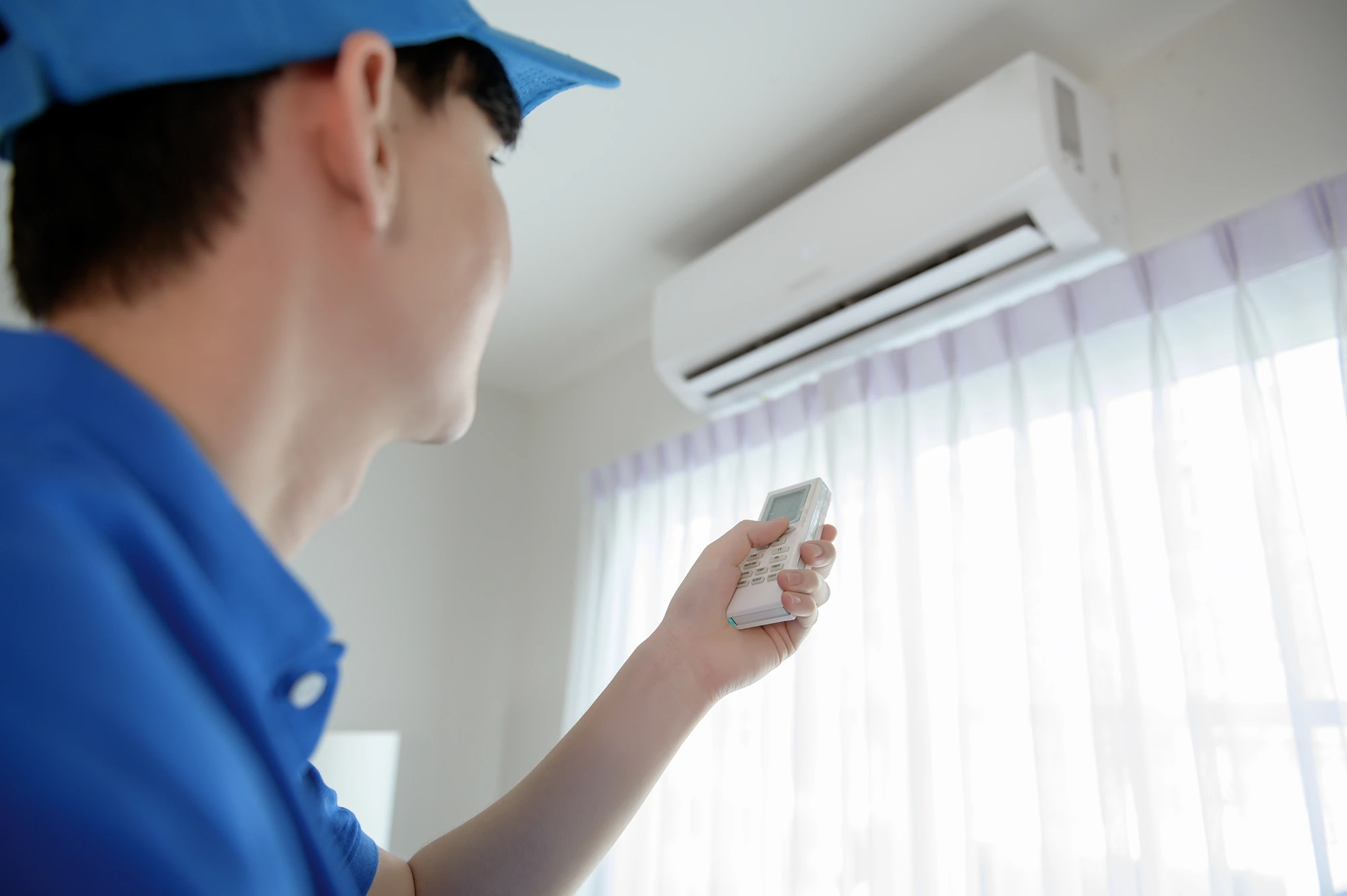
There is a very specific kind of ginhawa (relief) that we Filipinos feel when we step out of the scorching midday sun and into an air-conditioned room. Whether it’s entering a cool mall after commuting in EDSA traffic, or finally turning on your bedroom unit after a long, sticky day, that blast of cold air feels like a necessity, not just a luxury, in our tropical climate.
We rely heavily on our air conditioning units. They are our best defense against the relentless 35°C heat and the suffocating humidity that defines so much of the year in the Philippines. Because we need them so badly, we tend to take them for granted. We grab the remote, set it to 23°C (or lower, if you’re feeling brave about the electric bill), and as long as cold air comes out, we assume everything is okay.
But here is the uncomfortable truth about air conditioners, especially in a dusty, humid environment like ours: they are tough machines designed to keep working even when they are suffering. Long before your AC completely dies on the hottest day of dry season, it starts sending distress signals.
The problem is, these signals aren’t usually loud bangs or immediate failures. They are subtle, quiet indicators that dust, pollution, and mold are slowly choking your unit.
A dirty AC isn’t just waiting to break down; it’s actively hurting your wallet right now, potentially harming your family’s health, and wasting precious electricity. In a country with some of the highest power rates in Asia, ignoring a dirty AC is an expensive mistake.
If you are waiting for the air to turn hot before you call a cleaning technician, you’ve waited too long. Smart homeowners look deeper than just the temperature. Here are five hidden signs that your beloved unit is silently crying out for a professional aircon cleaning.
1. The “Amoy Kulob” Phenomenon (Phantom Scents)
We know what a broken appliance smells like-usually burning plastic or ozone. But an AC unit needs a cleaning long before it smells hazardous. Instead, it produces what we might call “phantom scents.”
You might notice a faint, stale odor when you first turn the unit on. It doesn’t smell sharp; it smells damp, musty, or earthy. It’s that distinct smell of old wet rags that didn’t dry properly in the sun-what we call “amoy kulob” or “amoy luma.” You might find yourself spraying Lysol or lighting scented candles because the room just doesn’t smell fresh, even though it’s cool.
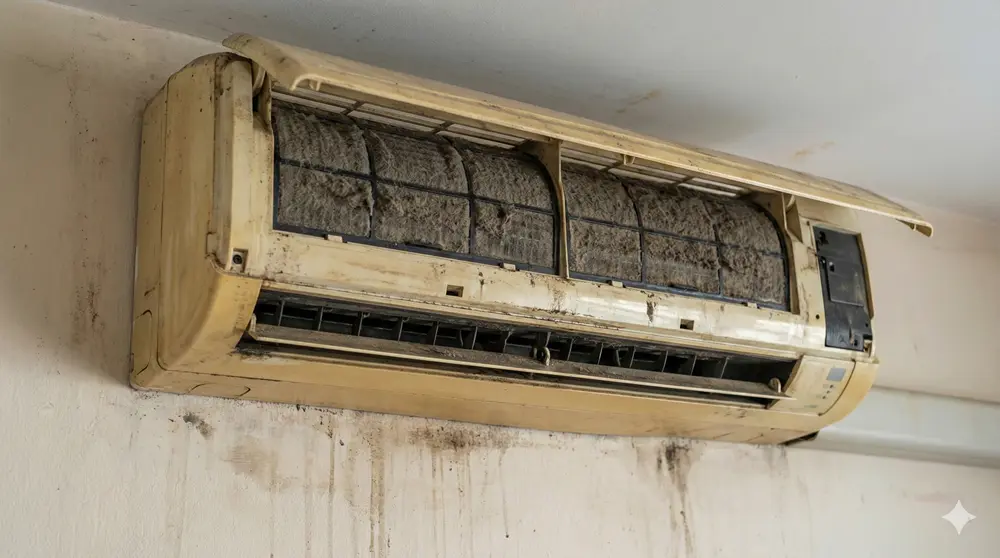
What’s happening inside? This is the smell of things growing inside your unit. Because of our high humidity, your AC is constantly pulling moisture out of the air. This creates a wet environment inside the indoor unit (the evaporator coils and drain pan). If those parts are coated in dust, dead skin cells, and urban pollution, that wet dirt becomes the perfect breeding ground for mold, mildew, and bacteria.
When you turn the AC on, the air rushes over this slimy layer, picking up those microbial smells and blowing them right onto your bed or living room sofa. You aren’t just smelling dirt; you are inhaling the byproducts of mold living inside your machine.
2. The Never-Ending “Allergies” (Indoor Air Quality Issues)
It’s common here to blame sniffles and coughs on the changing weather-from sunny to sudden rain. We often brush off a morning sneeze or itchy eyes as just “normal” city living.
However, if you notice that your family seems to have a perpetual “cold,” or if your asthma or allergies seem worse when you spend more time indoors with the windows closed and the AC running, your unit is likely the culprit. Another clue is dust: do you feel like you have to wipe down surfaces constantly, even though the windows are shut?
What’s happening inside? Your AC unit is the lungs of your room. It inhales indoor air, cools it, and exhales it back out. Standard filters trap big particles like hair, but fine dust and pollutants pass through and settle on the internal components, particularly the blower wheel (the fan inside).
If that fan is caked in debris, it becomes a high-powered dust cannon, recirculating allergens every time it runs. Furthermore, if mold is growing inside (see point #1), the unit is blowing spores into the air you breathe while you sleep. A deep cleaning doesn’t just wash the filter; it removes the established layer of filth inside the machine that is contaminating your air.
3. The “Meralco Bill Shock” (The Silent Tax)
This is the sign that hurts the most. You open your electricity bill, and it’s higher than last month. You rationalize it: “Well, it’s been really hot lately,” or “Maybe the kids left the TV on.” You pay it with a heavy heart.
While the intense Philippine heat certainly dictates energy usage, a dirty AC unit applies a “silent tax” to every minute it runs. If your usage habits haven’t changed but your kilowatt-hour consumption is creeping up steadily over several months, dirt is likely stealing your money.
What’s happening inside? The main job of your AC is moving heat. The indoor unit absorbs heat from your room, and the outdoor unit dumps that heat outside.
When the coils inside or outside get covered in a layer of Manila dust and grime, that dirt acts like a blanket. It insulates the coils. The refrigerant inside can’t absorb heat effectively indoors, and it can’t release heat effectively outdoors.
The result? Your compressor-the heart of the system and the biggest electricity guzzler-has to work much harder and run much longer just to reach the temperature you set. It’s like trying to run a marathon while breathing through a straw. The system strains, draws more amps, and drives up your bill significantly. A clean unit is an efficient unit.
4. The “Maalinsangan” Feeling (It’s Cool, But Still Sticky)
You set your split-type inverter to a comfortable 23°C. After an hour, the room isn’t hot, but it doesn’t feel right either. Your skin feels a bit clammy. The air feels heavy. You find yourself lowering the temperature to 20°C just to feel comfortable, freezing everyone else in the room.
This is the “clammy cool.” The air temperature is technically correct, but the humidity is still too high. The room feels “maalinsangan.”
What’s happening inside? An air conditioner’s second job is dehumidification-crucial in our tropical climate. As warm, humid air passes over the ice-cold evaporator coil inside, moisture condenses into water and drips away.
If the indoor coil is dirty, the dirt insulates the cold metal from the humid air. The air doesn’t get cold enough, fast enough, to effectively wring out the moisture. Furthermore, if the blower fan is loaded with dust, it might not be moving enough air across the coil to dry the room properly. You end up with cool air that is still saturated with moisture, leading to that uncomfortable, sticky feeling even when the AC is running full blast.
5. Subtle Changes in Sounds
We all know what a broken AC sounds like-a loud rattling like rocks in a blender, or a compressor that sounds like a dying truck engine. But a unit crying for a cleaning is quieter about its distress.
You need to listen to the baseline “white noise” of your unit. Do you hear a slight whistling or wheezing sound near the indoor unit that wasn’t there before? Does the outdoor unit seem to buzz a little louder or vibrate more intensely on its bracket?
What’s happening inside? These are sounds of restriction and strain. A whistling sound usually means airflow is blocked-perhaps the filter is totally clogged with dust, or the return vents are dirty.
If the outdoor unit (condenser) is clogged with dirt, mud splatter from rain, or leaves, the fan has to struggle to pull air through the fins, changing the pitch of the sound. These aren’t the sounds of immediate death, but they are the sounds of accelerated wear and tear, meaning your expensive unit will have a shorter lifespan.
Conclusion: Don’t Wait for the Breakdown
In the Philippines, we sometimes have a “puwede na ‘yan” (that’ll do) mentality until something actually breaks. But when it comes to air conditioning, “not broken” can still mean dirty, inefficient, and unhealthy.
Ignoring these five subtle signs is just kicking the can down the road toward a bigger problem-either a massive repair bill or a replacement unit much sooner than necessary. The dirt accumulating inside your unit isn’t going anywhere; it’s only getting thicker.
The difference between a unit that just blows air and a unit that truly performs is a professional general cleaning (often called a “chemwash” here). By heeding these hidden signs, you aren’t just buying cooler air; you are ensuring lower electricity bills, a healthier home for your family, and protecting your investment. Don’t wait for the heat to become unbearable-listen to what your AC is trying to tell you today.