When someone in the household has been sick, the home may need more than its usual tidy-up. Used tissues, laundry, bathroom touchpoints, and shared devices deserve a deliberate sequence. That does not mean spraying every room indiscriminately. The right steps depend on the illness, the surfaces, and the product label. If a clinician or local health authority has given specific directions, those take priority over a general cleaning article.
The CDC guidance on when and how to clean and disinfect a home explains that cleaning is a routine measure and that additional disinfection is appropriate in certain circumstances, such as when someone is sick. This guide helps organize the work without claiming that a cleaning visit guarantees a germ-free home. A home cleaning service can help with accessible surfaces, while the household should share any relevant precautions before a team arrives.
Make a short map of used spaces
List the bedroom, bathroom, dining area, and shared surfaces the ill person used. Note door handles, light switches, remote controls, phones, and sink taps. Start with ordinary trash and visible dirt before applying any disinfectant. Keep a separate bag or container for used tissues and follow local waste guidance where applicable. Do not bring soiled materials through a freshly cleaned food area without a plan.
Decide who can safely do the work and when. If someone remains ill, avoid unnecessary exposure and follow current health guidance relevant to that illness. A household member with a health concern may need professional advice. Set out gloves or other protective equipment only as the product label or applicable guidance calls for it. Make the scope manageable rather than trying to treat every object in the home at once.
Clean surfaces before disinfecting when needed
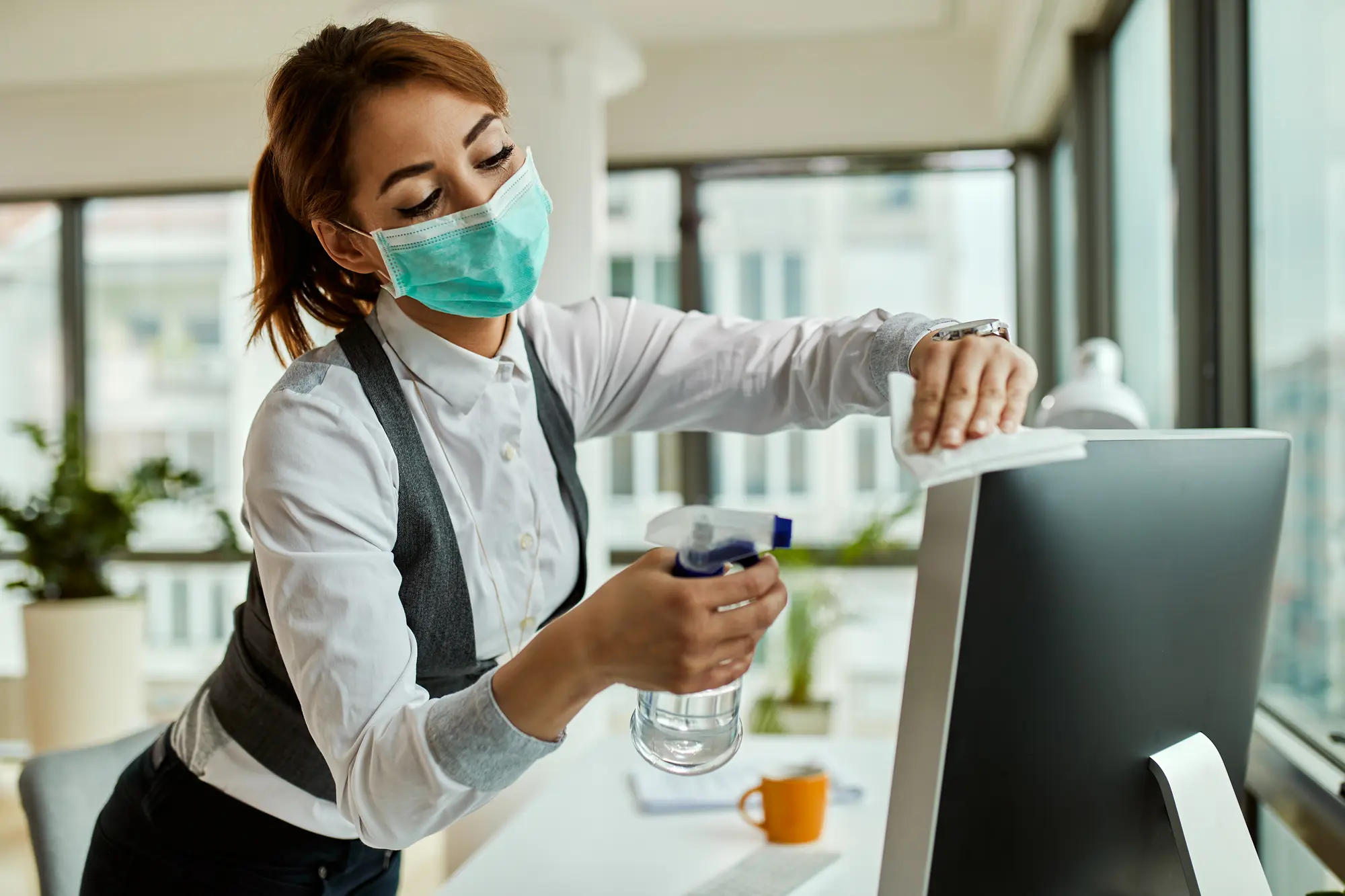
Remove visible soil with a cleaner suitable for the material. Then, for a surface that needs disinfection, use a product labeled for that purpose and exact surface. Follow the directions for the amount, ventilation, contact time, and any required rinse. A quick spray and immediate wipe may not deliver the contact time on the label. Avoid mixing products or making an unmeasured stronger solution.
Hard surfaces are not identical. A sealed countertop, wooden desk, electronics, and upholstered chair may each need a different method. Apply product to a cloth when the device maker requires it and keep liquid away from ports. If the surface is food-contact, follow the label for its use and rinse requirements before the next meal. Do not equate a strong fragrance with effective disinfection.
Prioritize high-touch points without missing basics
Work through the bathroom and shared rooms in a defined order. Clean taps, flush handles, door pulls, light switches, and other frequently touched hard surfaces with compatible products. Use separate cloths for toilets and food areas. Check that the trash bin and its lid are cleaned if soiled. The CDC facility cleaning guidance reinforces the importance of instructions and surface compatibility, though a home can use a simpler room-by-room plan.
Do not carry a dirty cloth from one surface to the next. Change or launder tools as appropriate. A cleaner should know which areas were in use, and the household should tell the crew about any private items that must not be touched. Leave a note for surfaces excluded due to delicate finishes or electrical risk. An honest list of treated areas is more meaningful than a blanket claim that the entire home was sanitized.
Handle linens and laundry without shaking them
Collect bedding and clothes carefully, following any disease-specific guidance from a health authority. Avoid shaking visibly soiled laundry around the room. Use the item’s care label for washing and drying, and wash hands after handling dirty items. Clean the basket if it was visibly soiled. Keep clean linens in a separate area until the room’s touchpoints are finished.
A blanket or pillow with a nonwashable filling may need a maker-approved spot method or professional assessment. Do not soak a mattress to make it feel disinfected. If a liquid reached inner padding, report it honestly and consider whether the material can be dried. Routine deep cleaning can address surrounding dust and surfaces, but it is not a substitute for a specific medical or public health protocol.
Reset bathroom and kitchen separately
Start by clearing used products and trash. Clean the sink and other surfaces with dedicated tools, then use any required disinfection step on compatible high-touch points. Keep toilet tools out of the kitchen. In the kitchen, wash dishes and food-contact surfaces according to safe food handling directions. Do not use a bathroom chemical on the counter unless its label permits that exact use and the rinse instructions are followed.
If someone had vomiting or diarrhea, follow applicable illness-specific public health guidance rather than improvising with a general household cleaner. A standard cleaner may not have the right claim for every pathogen. Ask for professional guidance where a vulnerable household member is involved. The visible outcome should be a clean, usable room with products stored securely, not wet chemicals left on handles and floors.
Ventilate and store products as directed
Read product instructions for ventilation, gloves, dilution, and storage. Keep children and pets away while work is in progress and until surfaces are ready for use. Do not combine bleach with other cleaners. Avoid spraying into air vents or onto fabrics in the hope of treating the whole room. The task is to clean the actual surfaces used and follow any appropriate disinfection directions, not to create a strong smell.
After work, close containers, dispose of used materials appropriately, and wash hands. If a cleaner brings products, ask what was used and whether any surfaces still need to remain wet for a specified contact time. Do not reenter a small closed room before the label permits it. If a person is sensitive to fragrance or chemicals, tell the provider in advance and seek appropriate advice for their circumstances.
Check the room before normal use resumes
Inspect the high-touch checklist, trash, linens, bathroom, and food areas. Verify that any required rinse has been done and the floor is dry. Return clean bedding and personal items after the surfaces are ready. Keep a short record of the product and areas treated if that is useful for a caregiver. A surface may still be worn or stained after proper cleaning; cosmetic appearance is not a reliable measure of the process.
Do not promise that no one will become sick after a cleaning visit. Hygiene, ventilation, and illness-specific measures involve more than surface work. If symptoms or a particular exposure require medical advice, contact a qualified health professional. A practical home reset supports comfort and routine while staying within what ordinary cleaning can actually accomplish.
A practical schedule and handover
During an illness, follow the relevant health guidance and clean shared high-touch surfaces as appropriate for use and contamination. After recovery, remove trash, launder compatible linens, clean visible soil, and disinfect appropriate surfaces according to product directions. Return to an ordinary cleaning rhythm when the situation has passed. Keep a short list of rooms actually used rather than treating unused storage areas first. Do not let a calendar substitute for illness-specific instructions.
Before a cleaner arrives, state which rooms and surfaces need attention and whether anyone remains ill. Share product sensitivities and any applicable health authority instructions. Agree on trash, laundry, bathroom, kitchen, and high-touch scope, plus who provides materials. At completion, ask for the names of products, any remaining contact time or rinse step, and the areas that were excluded. Keep private medical details to what the crew needs for the task.
Questions to ask before booking
Ask whether the provider can follow the relevant product instructions, use separate tools for bathroom and food areas, and provide a written task list. Do not accept an unsupported claim to sterilize a home. A service inquiry should describe the space and the cleaning outcome needed without asking an ordinary crew to deliver a medical guarantee. If the situation involves significant contamination, identify a properly qualified specialist.
Frequently Asked Questions
Should I disinfect every surface in the house?
Focus on surfaces used and the applicable illness guidance. Regular cleaning is often enough elsewhere; extra disinfection should follow product labels and the actual situation.
Can I mix two cleaners for a stronger result?
No. Mixing products can be hazardous. Use one appropriate product exactly as directed.
Does a fragrant room prove the cleaning worked?
No. Fragrance is not a measure of soil removal, contact time, or an appropriate disinfection process.
Should a cleaner handle used bedding?
Only if that laundry and the necessary precautions are agreed in advance. Follow the item’s care label and applicable health guidance.
Can a cleaning company guarantee nobody gets sick?
No. A company can describe its methods and treated surfaces, but it cannot guarantee a medical outcome.