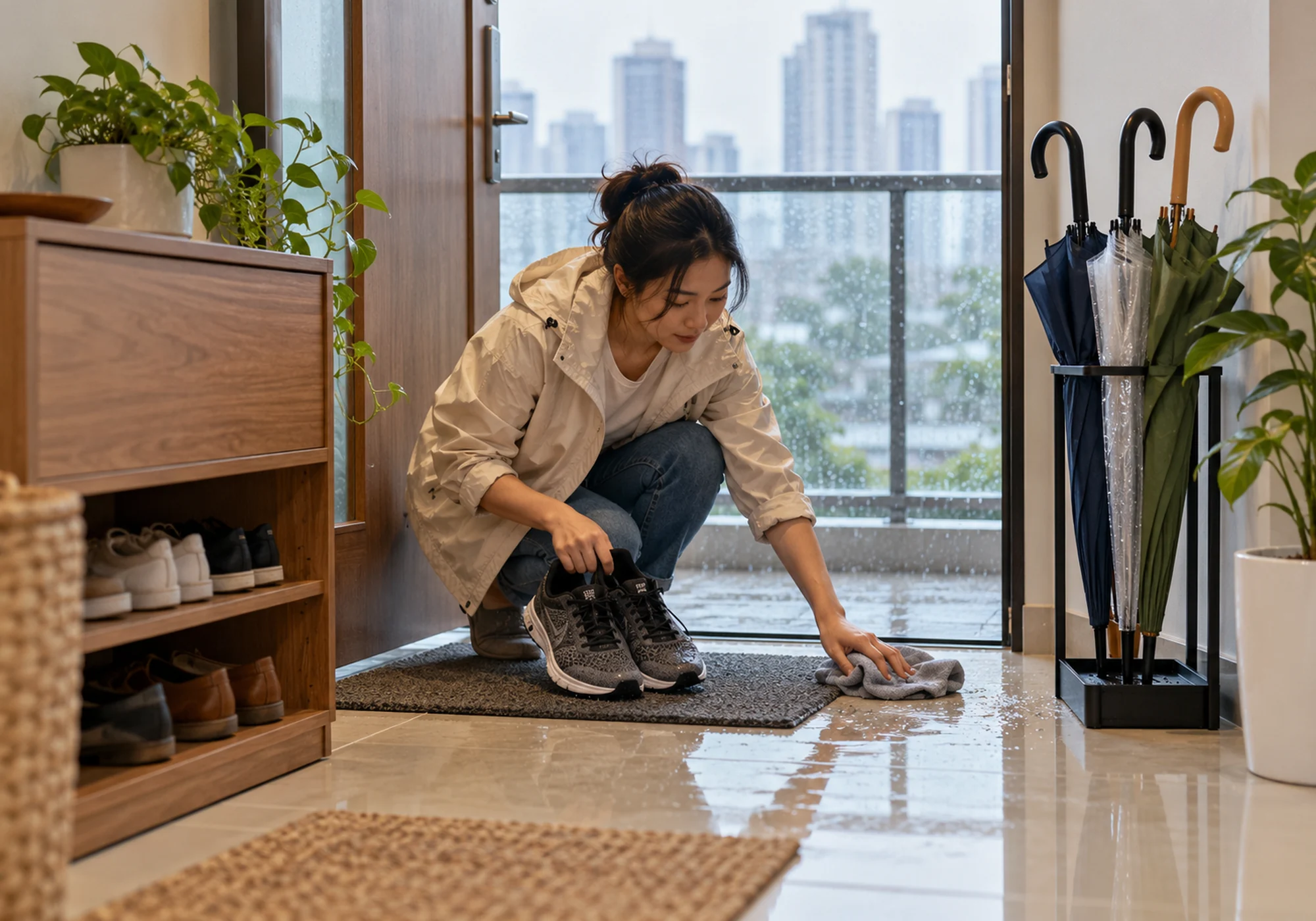
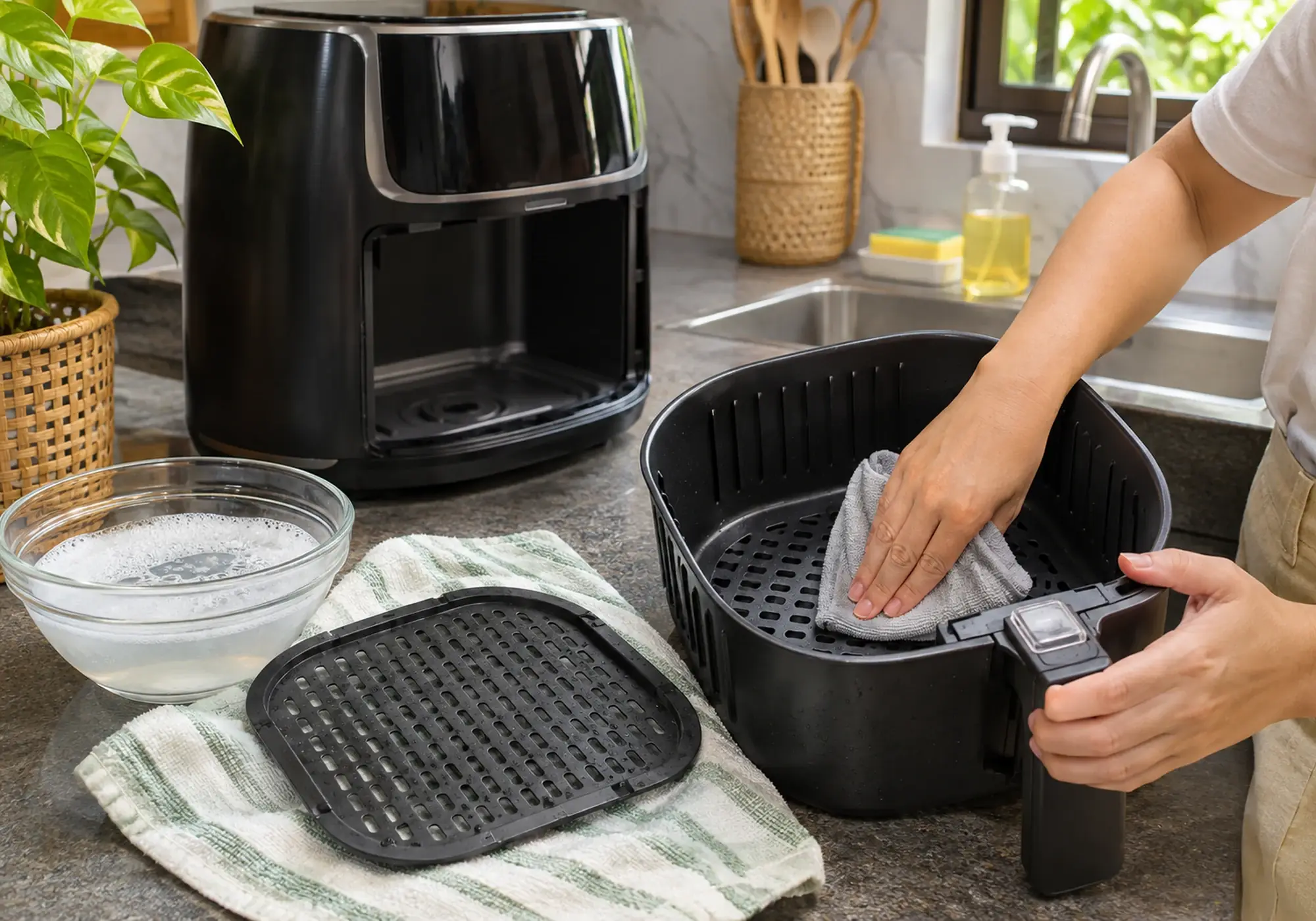
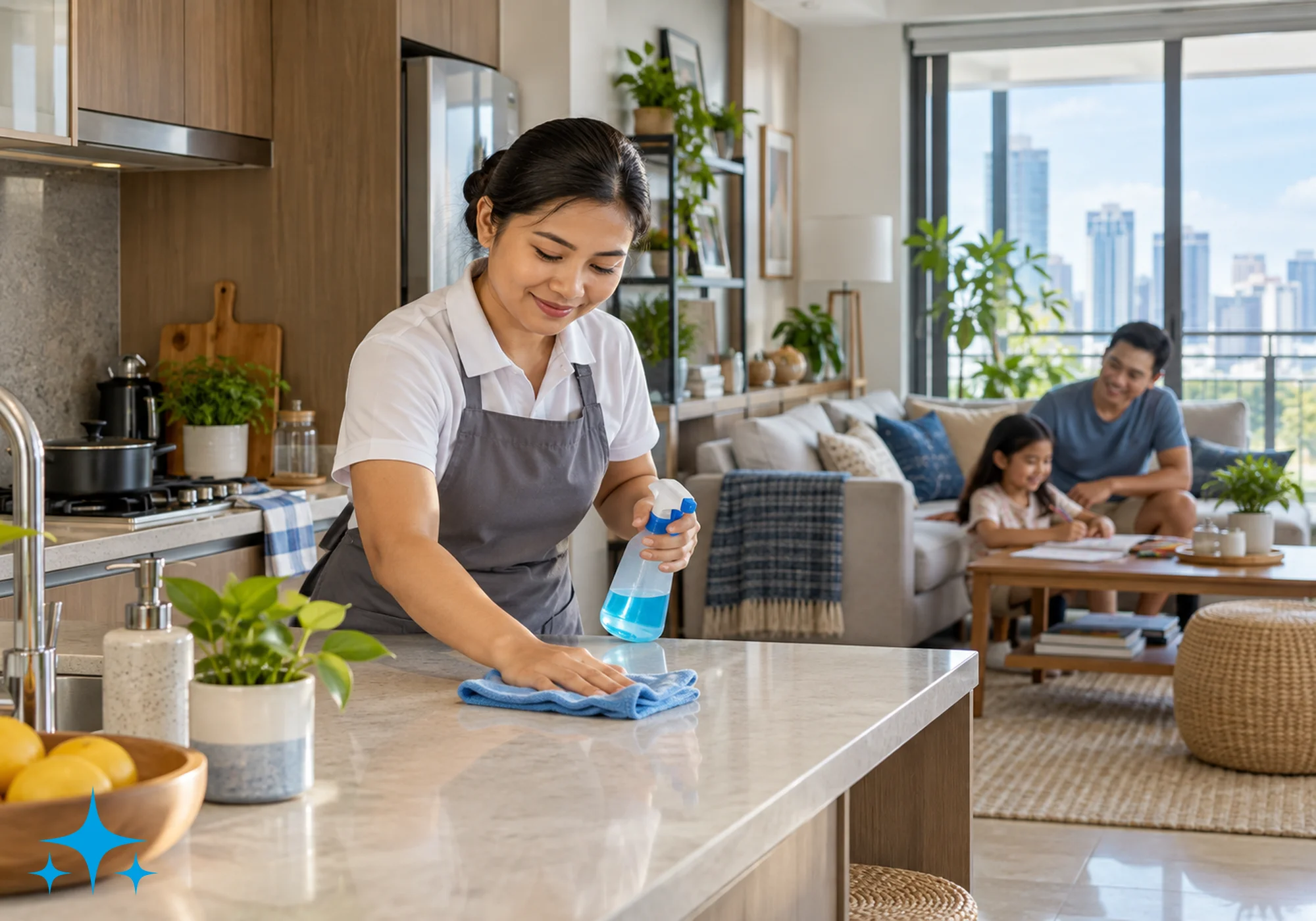
After guests leave, deal with food and spill hazards first. Then collect waste, clear surfaces, and clean floors once sticky marks have been treated according to the material. A short sequence keeps the cleanup manageable and helps you avoid rubbing a stain into fabric or washing grit across a floor.
A birthday dinner or family gathering can leave several different jobs in one room: dishes, sticky drink marks, crumbs, decorations, and damp footwear near the door. Trying to mop around all of them often means cleaning the same area twice. A staged plan turns the room back into usable space without unnecessary scrubbing.
This guide focuses on cleaning after guests leave. For arranging occasional help, see the site’s one-time cleaning service. Describe the actual post-event condition when requesting a visit rather than assuming an ordinary maintenance clean covers every spill and discarded item.
Start with the walk-through
Check the active routes between the entrance, kitchen, bathroom, and seating areas. Look for broken objects, slippery patches, hot equipment, trailing cables, and anything children or pets could pick up. Keep people away from an uncertain area until it can be handled appropriately.
Do not reach into an opaque waste bag to search for an object or compress its contents by hand. If glass has broken, use a suitable controlled collection method with appropriate tools and protection. Keep shards out of ordinary hand sorting and follow local disposal requirements.
Separate electrical concerns from cleaning. If liquid has reached an outlet, powered decoration, or appliance, stop using the affected equipment and obtain appropriate advice. Wiping the visible spill does not establish that the electrical item is ready to use.
Choose a realistic first goal: make the home safe and manage time-sensitive items, then complete the detailed reset. A tired host does not need to restore every decorative corner before addressing a wet floor or a leaking bag.
Deal with food through a clear decision process
Have a responsible household member decide what to retain, refrigerate, discard, or return to a caterer using appropriate food-safety guidance. A cleaner should not guess how long a dish has been out or whether leftovers are suitable to eat.
Keep retained food away from the cleaning area in appropriate containers. Label it when needed for the household’s own storage system. Do not let the cleanup become a process of moving uncovered dishes from one dirty surface to another.
Separate serving utensils and hired equipment from disposable items. Check the event agreement for collection and return requirements. Place items awaiting the caterer in an agreed location that does not block normal movement through the home.
Once food decisions are complete, remove crumbs and residue from the serving area with the appropriate method. The site’s food-contact surface guide can help keep that work distinct from general furniture wiping.
Collect waste without losing belongings
Set up clearly identified containers for the collection categories actually used by the building or local service. Do not assume every cup, paper plate, or decorated package belongs in recycling. Food residue and mixed materials can affect acceptance.
Check tables and seating areas for personal belongings before clearing them. Place found items in one designated tray. Do not discard an envelope, small toy, or party favor simply because it sits among used napkins.
Use manageable bag sizes and keep liquids from leaking through ordinary waste. Follow the applicable disposal instructions rather than pouring unknown contents into drains. Move closed bags through a clear route to the approved holding area.
In a condo, observe collection hours and shared-space rules. Keep bags out of corridors and exits. A clean living room should not be achieved by transferring the problem to a common hallway.
Match each spill to its surface
Identify what was spilled, where it landed, and what has already been applied. A sugary drink on tile, oil on finished wood, and sauce on a fabric cushion need different decisions. Do not spray one strong cleaner across every visible mark.
Blot a fresh suitable fabric spill with a clean absorbent cloth and follow the item’s care directions. Avoid rubbing or soaking an unknown upholstery material. The site’s fabric sofa cleaning guide explains the importance of labels and controlled moisture.
For hard surfaces, remove loose solids carefully and use a compatible method. Keep water out of vulnerable seams and edges. If the finish is uncertain, pause treatment and record the mark rather than turning a small spill into widespread damage.
| Post-event condition | First useful decision | Work to keep separate |
|---|---|---|
| Fresh fabric spill | Identify fabric and permitted treatment | Deep extraction or restoration |
| Sticky hard floor | Identify finish and product compatibility | Scratch or coating repair |
| Broken glass | Isolate and arrange controlled collection | Ordinary bag sorting |
| Unknown stain | Record substance and prior products | Unapproved chemical experiments |
| Liquid near powered equipment | Stop use and seek suitable advice | Routine wiping around electricity |
Clear surfaces before floor work
Remove approved tableware and personal items, then clean the reachable furniture surfaces by material. Work from higher surfaces toward lower ones so crumbs do not fall onto a floor already finished. Keep delicate decorations under the owner’s control.
Check table edges, chair seats, and reachable areas beneath place settings. A room can look tidy while sticky residues remain where hands and clothing contact it. Focus on the actual event layout instead of repeating a generic whole-home checklist.
Use separate tools for food areas, bathroom surfaces, and floors. Change dirty cloth sections and follow product directions. Avoid returning a cloth used on a bin to the dining table because the same room contains both.
Allow cleaned surfaces to be ready before returning accessories. A damp table covered with a runner may hide remaining moisture. Check that any retained serving equipment is placed on a suitable clean dry surface.
Handle sticky floors in manageable zones
Collect dry crumbs and loose debris with a method appropriate for the flooring. Check tools for trapped grit before wet cleaning. Dragging abrasive particles across a delicate surface can create a new problem while removing the original spill.
Follow the floor maker’s directions for product, dilution, and moisture. More soap does not automatically remove sticky residue more effectively and can leave additional film. Complete any required rinse or wipe-off stage and inspect after drying.
Clean one zone at a time while keeping a usable route through the home. Tell other household members where wet work is happening. Do not trap yourself in a room or leave the only bathroom route slippery while everyone is preparing for bed.
Look under reachable table edges and along the event’s traffic path. Keep furniture movement within the agreed safe limit. A heavy dining cabinet should not be dragged across the floor simply to chase a few visible crumbs.
Give the guest bathroom a separate reset
Inspect the sink, handles, reachable splashes, bin, and floor. Restock household supplies if that task is included. Keep toilet tools separate from those used on other fixtures and follow the appropriate cleaning-product instructions.
Check whether damp hand towels or mats need laundering under their labels. Replace them with ready clean items if available. Do not put a wet mat back on a floor before both are ready.
Report a blocked drain, persistent leak, or damaged fixture separately. Repeated cleaning does not fix a plumbing problem discovered after a busy gathering. Keep those observations on the household follow-up list.
Do not expand the cleanup into automatic whole-home disinfection. Choose any needed disinfection according to the actual situation and applicable guidance. Ordinary event residue and a specific illness-related concern require different planning.
Sort linens, decorations, and borrowed items
Check tablecloth and cover labels before washing. Record the likely stain source and treat only as permitted. Separate fragile or dry-clean-only textiles rather than including them in a hurried mixed load.
Take decorations down only when it is safe and authorized. Keep powered decorations unplugged and follow their handling directions. Leave high installations, heavy fixtures, and unfamiliar attachments for suitable help.
Create a return area for borrowed serving pieces and hired items. Use a simple count or photo for the household’s reference. Keep this inventory separate from waste so something awaiting pickup is not accidentally discarded.
For reusable decorations, plan their own cleaning and storage rather than sealing them away damp or dusty. A post-event room reset can finish while those items remain in an identified follow-up area.
Divide the work across two useful sessions
The first session can address hazards, food decisions, leaks, ordinary waste, and fresh spill response. The next session can complete floor care, bathroom details, linen processing, and the return of decorations or hired equipment.
Assign actions by person and location. For example, one adult makes food decisions while another collects ordinary cups and a third handles approved dishwashing. Keep responsibilities clear so several people do not apply different products to the same stain.
If using paid help, prioritize the rooms needed first for normal life. A clean usable kitchen and dry walking route may be more valuable that evening than a perfect decorative shelf. List remaining tasks so nothing depends on memory the next day.
The site’s small-apartment cleaning schedule can help return the home to its ordinary routine after the event. A one-time cleanup should leave a manageable starting point for regular upkeep.
Request an accurate post-party cleaning scope
Send the provider the event type, used rooms, approximate guest count, surface details, and photos of the current condition. Identify dishwashing, waste transfer, spill treatment, linens, and decoration handling as separate requests. Confirm which tasks are available.
For a broader reset, discuss residential deep cleaning and explain any special residue or access issue. Do not assume the service includes catering returns, bulky hauling, electrical work, or specialist stain removal.
Agree on the practical acceptance checks: ordinary waste transferred, agreed surfaces cleaned with suitable methods, floors dry and usable, and unresolved damage recorded. This makes the handover easier than an undefined promise that the home will look as though no gathering occurred.
Afterward, keep one short note about what would improve the next event cleanup. Better waste-container placement, a protected serving zone, or a clearer borrowed-item list can reduce repeat work without changing the gathering itself.
Leave a useful next-morning list
If the evening cleanup ends before every detail is complete, write down the remaining tasks by location. Identify what has already been addressed, what is still drying, and which item needs a specialist or owner decision. This prevents the next person from treating an intentionally untouched stain as an overlooked ordinary spill.
Keep borrowed and hired items on a separate return list rather than mixing them with cleaning tasks. Give each a responsible person and agreed destination. A bag beside the door should have an obvious purpose so it is not mistaken for waste during the final room sweep.
Check the household’s first-use needs for the morning: a clear kitchen work area, ready bathroom, dry walking routes, and a safe place for retained belongings. Finish the tasks that support those needs before spending time on less urgent decorative details.
After the home returns to ordinary use, review one or two practical improvements for the next gathering. Better placement of ordinary waste containers or a defined tray for found items can save repeated sorting. Keep the lesson specific to your event and room layout rather than creating an overly complicated permanent system.
Frequently Asked Questions
Can a cleaner decide which unopened party supplies to donate?
Keep that decision with the owner. Set aside approved donation items clearly and confirm the receiving organization’s acceptance requirements. Unopened appearance alone does not establish suitability or authorize disposal of someone else’s property.
What should I do with a guest’s forgotten jewelry or wallet?
Place it in a secure location and contact the guest through the host’s normal channel. Avoid putting identifying details in a public group or cleaning photo. Record who found it and where if that helps the host return it accurately.
Can I ask a provider to return rented chairs and tables?
Confirm transport and handling separately with the provider and rental company. General home cleaning does not establish responsibility for rental returns. Keep the return count, schedule, and any damage review under an agreed arrangement.